Panyu District, Guangzhou · Manufacturing since 2013
Tube OD Ø4–150 mm hi@newsiyuantube.com
NewSiyuan TubeTube Bending · Panyu, Guangzhou WhatsApp

Home / Tube Parts / Furniture

Furniture Tube Frames | Chair Rings, Table Frames and Shelving

We bend and weld tubular frames for chairs, stools, tables, shelving and coat stands: closed seat rings, four-leg frames with flattened feet, table frames and shelving uprights. Tube Ø4–150 mm, wall 0.8–5 mm, in carbon steel, 304 stainless or aluminium. Made to drawing in Panyu, Guangzhou since 2013. Samples in 3 days with existing tooling, production runs in 25–40 days, minimum one piece.

What is on this pageFrames, not finished furniture. The tube is the part we make.

MaterialCarbon steel, painted or powder coated. 304 stainless for outdoor and café frames that stay unpainted. Aluminium where the frame has to be carried.
Typical partsClosed seat rings, chair and stool frames, table frames and aprons, shelving uprights and ladders, bench frames, coat stands.
What decides acceptanceWhether the ring closes on itself, whether the four feet sit level, and whether a weld or a joint is visible on the face the user touches.
Where the saving isOne bent ring replaces four mitred corners and the grinding that follows them — a finishing saving, not only a welding one.
Not includedUpholstery, wood, plastic, glass, and assembly with any of them.

Frames are supplied bare, primed or coated from an outside finishing shop. If you already have a coater, the frames ship bare and the coating stays in your own chain.

One ring instead of four weldsThe clearest case on this site for bending over welding.

A seat ring with four mitred corners means four welds, four ground and polished joints, and four places where a coating can fail or a rust line can start. A ring formed in one piece has none of them — provided the last bend meets the first, which is a tooling and springback question rather than a finishing one.

When a bent part beats a welded one, and when it does not, is set out on bent tube vs welded frame.

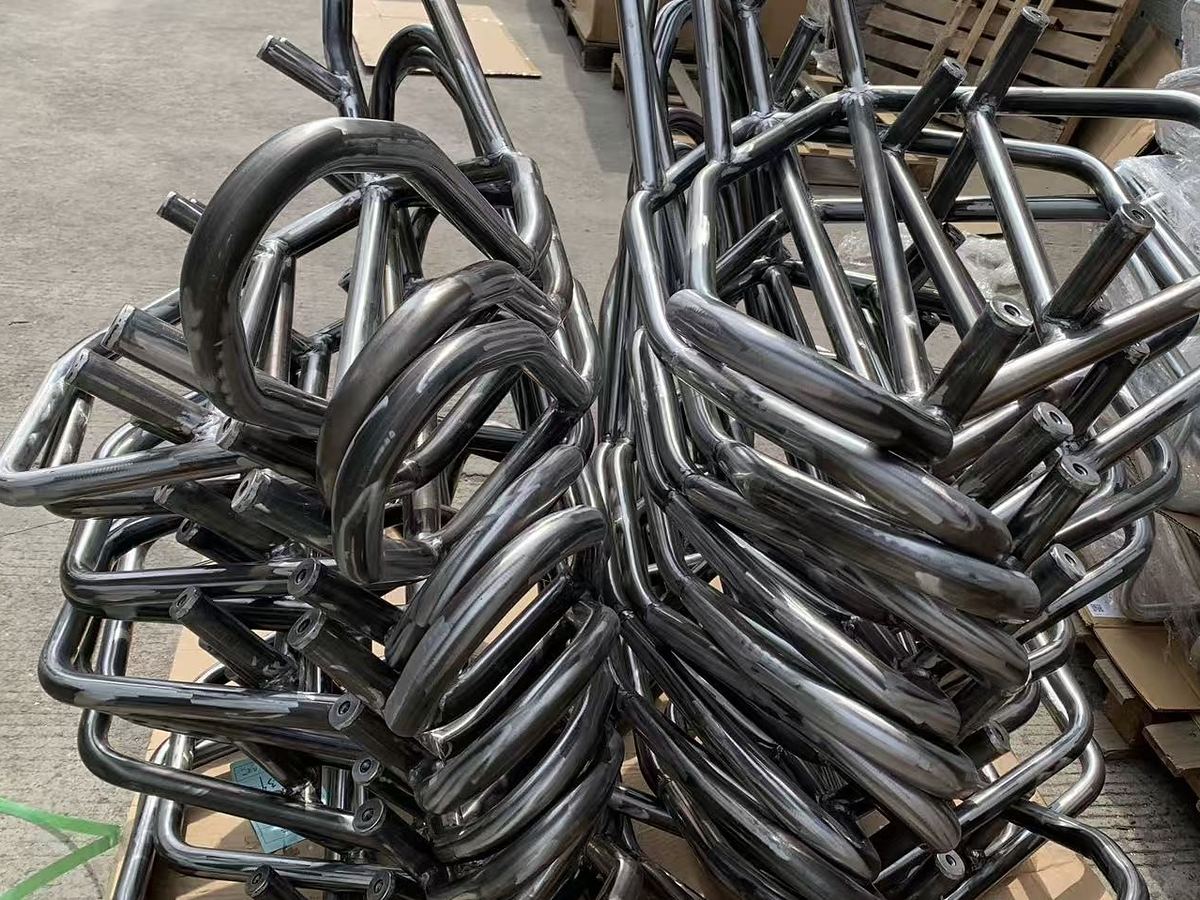
Three frames at different stagesClosed and coated, welded and bare, and a stack waiting for welding.
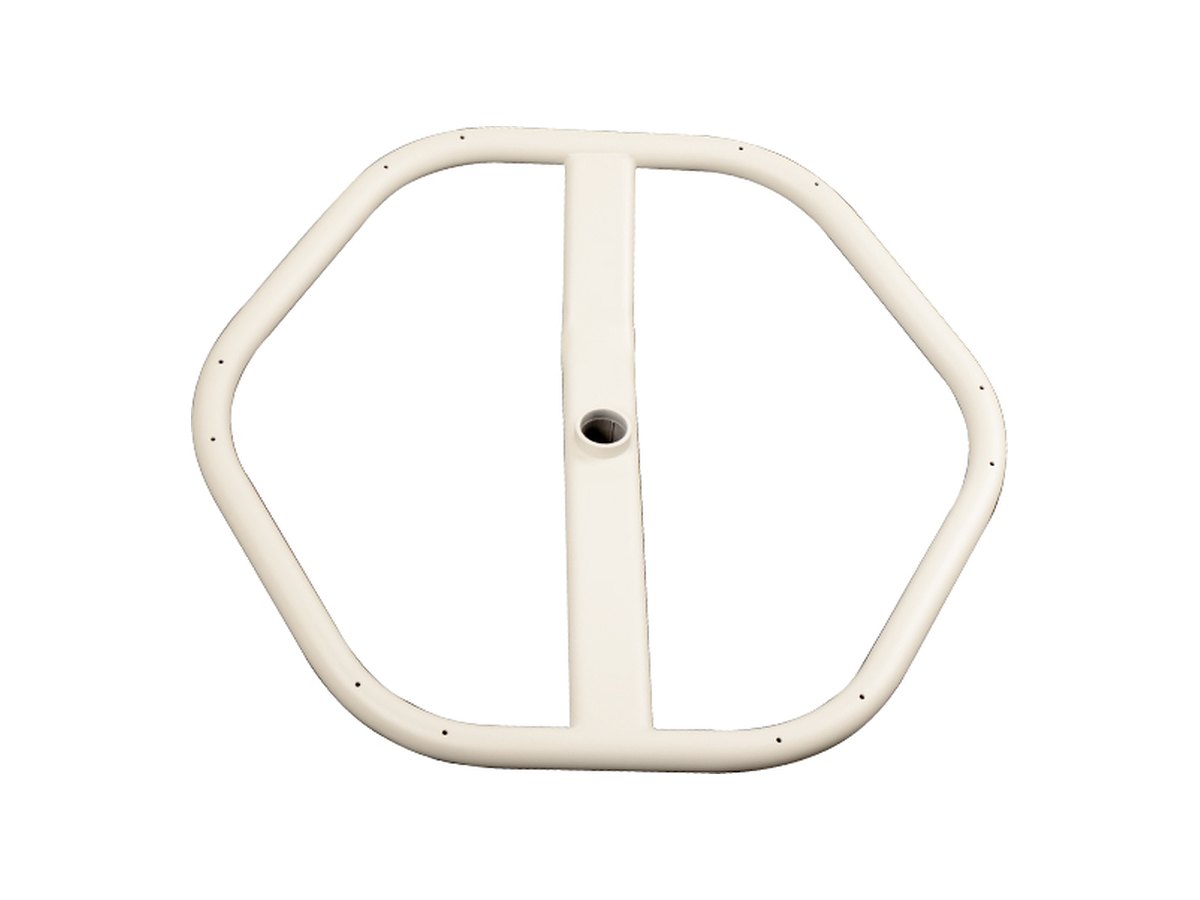
Closed-loop bent tube seat frame with flattened centre beam, pierced rim holes and welded joints, powder coated
A finished seat ring: the loop closed on itself, the centre beam pressed flat, rim holes already in place.
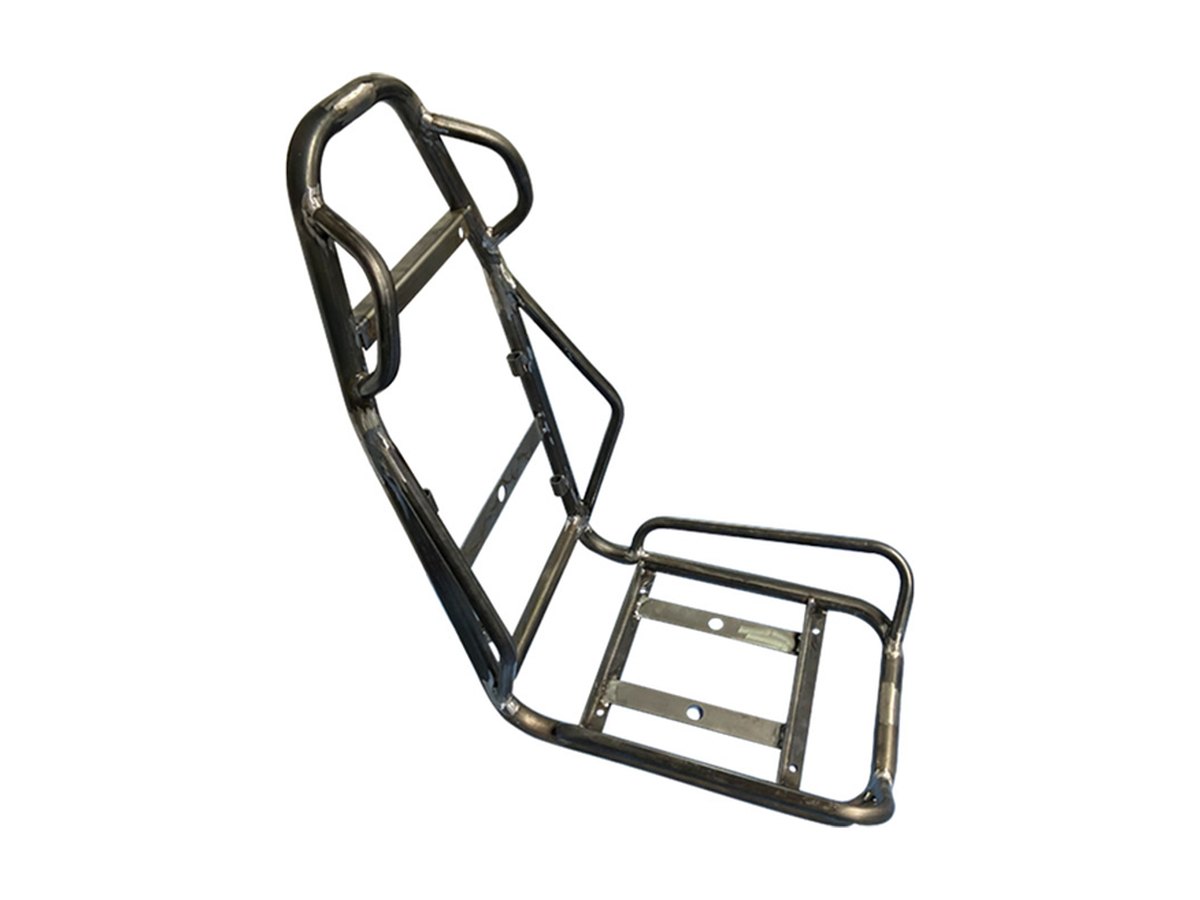
Bent and welded tubular seat frame before painting
The same family of part before coating. Welds are still visible here — this is where a joint either gets dressed or does not.
Bent tube frames stacked ready for welding
Formed frames stacked before welding. A frame that is out of plane shows immediately in a stack.

Finishing, packing and what a furniture order usually asksThe tube is the easy half of a furniture enquiry.

The bending range, the dies on the rack and the difference between cutting and bending are on tube bending services. Small orders are described on MOQ one piece.

Limits — what we will not take onA furniture enquiry often arrives as a photograph of a finished chair. That is not enough to quote.

  1. No load rating. We do not hold BIFMA or EN 16139, so no tested load figure is issued for a frame. If your customer needs a certified load test, the testing house is your route, not this workshop.
  2. No upholstery, wood, plastic or glass. Frames only — the finished chair is not assembled here.
  3. No product design. We make to your drawing. If the design is not fixed, a prototype can be quoted to your dimensions, but the geometry decision stays yours.
  4. No plating or powder coating in house. Grinding, sandblasting and the electrolytic wash are done here; coating and plating go outside, or to your own finisher.
  5. Bending stops at Ø150 mm. Larger tube can be cut here, not bent.
  6. No price without a drawing. Tube size, wall, bend count and quantity all move the figure.

Frames are made to a drawing or a sample. Photographs are useful for understanding intent, but dimensions, wall thickness and the joint method have to come from you.

General information only — not engineering advice. Suitability for a specific application, load case or service environment must be confirmed by the buyer's engineer.

Questions from furniture makers and importers

Can you make a closed seat ring in one piece?
Yes. The ring is bent as a loop on one die and checked against its closing gap on the fixture, so the two ends meet before welding. Wall from 0.8 to 5 mm. A tight radius on thin wall needs a mandrel, and the outside of the bend thins — how much is measured, not assumed, and a radius that will not work is reported before the sample is made.
Do you powder coat the frames?
No. Grinding, sandblasting and the electrolytic wash are done here; powder coating and plating go to an outside finishing shop. If you have your own coater, the frames can ship bare. Chrome and mirror polish are quoted per part after the shape is seen: the inside of a bend cannot be reached by a polishing wheel.
Is there a load rating on the frame?
No. We do not hold BIFMA or EN 16139, so no tested load figure is issued. What is issued is a dimensional report against the drawing. Structural performance of the finished chair is the designer's calculation, not a claim this workshop can make.
What is the smallest order?
One piece, so the frame can be shown and tested for fit before a batch. A new die or a welding fixture adds about two weeks at prototype stage. Once the tooling exists, a sample is 3 days and a run is 25–40 days.

Send the frame drawing, or a sample frame.

Tube size, wall, how the joints are made and how the frame is finished. One piece is enough to start.

WhatsApp