Panyu District, Guangzhou · Manufacturing since 2013
Tube OD Ø4–150 mm hi@newsiyuantube.com
NewSiyuan TubeTube Bending · Panyu, Guangzhou WhatsApp

Home / Tube Parts / Motorcycle

Motorcycle Crash Bars and Tube Parts | Bent, Welded, Powder Coated | Ø4–150 mm

We bend and weld motorcycle crash bars, engine guards, rear luggage racks, roof ladder racks, handlebars, subframes and centre stands. Round tube from Ø4 to Ø150 mm, wall 0.8–5 mm (outside diameter from 4 to 150 millimetres), carbon steel or stainless, welded to laser cut brackets and plates. Made to your drawing in Panyu, Guangzhou since 2013 and shipped to eight countries. Prototypes in 3 days for standard round tube with existing tooling; production runs in 25–40 days.

Crash bars are the core, the rest is the same jobAll of them are a bent tube plus welded brackets, checked as one part.

A crash bar is not a complicated part. It is a tube bent symmetrically, welded to mounting plates or bosses at exact positions, then coated. What decides whether a bar is any good is whether the two sides match, whether the mounting holes land where the frame expects them, and whether the coating matches the agreed finish specification. Those are manufacturing checks, not crash-performance claims.

Manufacturing limits and tooling are on tube bending services; drawing-based checks and document conditions are on quality and inspection. Listed materials, sections, diameters and wall thicknesses are not a guarantee of every combination; feasibility must be confirmed against the drawing, radius and available tooling.

Crash bars and guardsPairs, not single parts — the left and the right have to match.
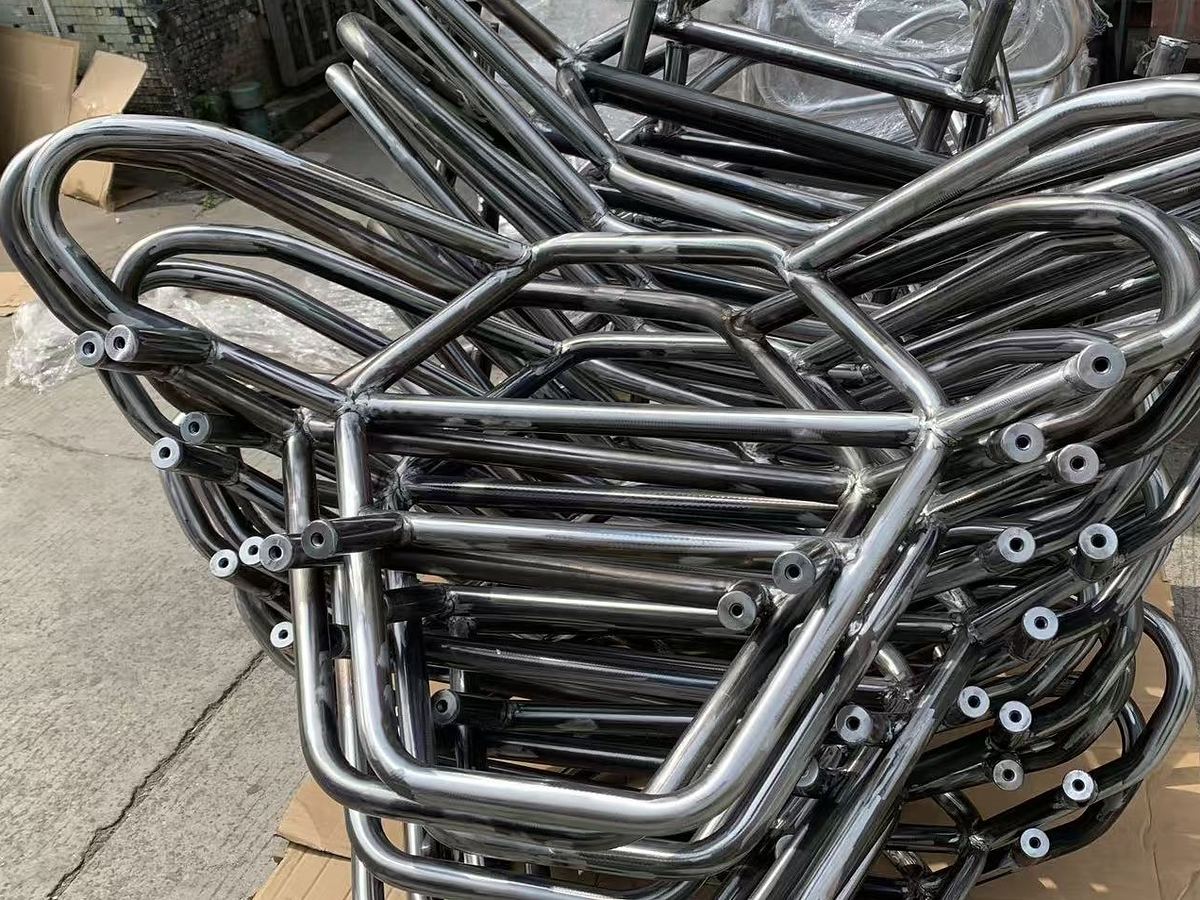
Stack of powder-coated motorcycle crash bars
Finished bars, powder coated and stacked for packing. Coating goes on after every weld, never before.
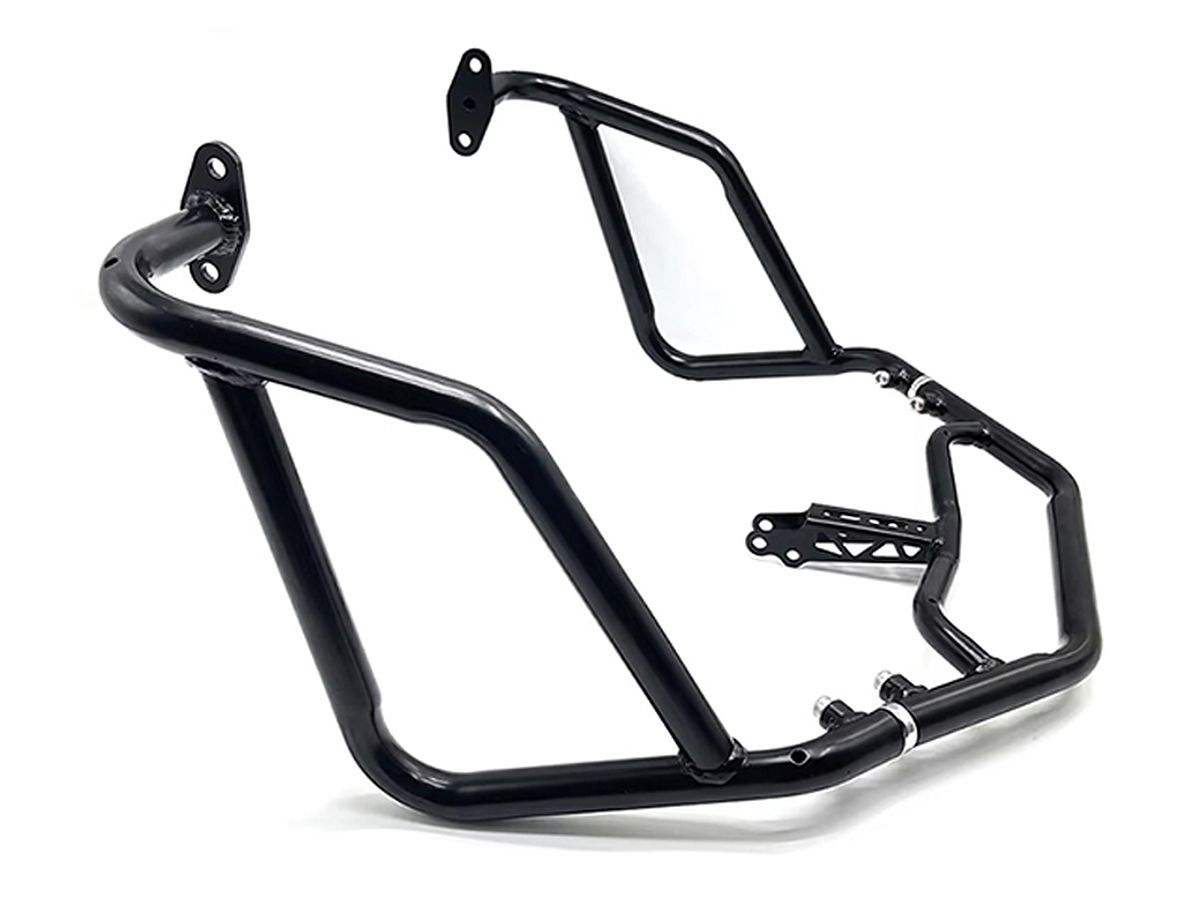
Black tubular engine guard with welded mounting plates and spacer sleeves
Engine guard: bent tube, welded mounting plates, spacer sleeves welded in place.
Pair of black tubular crash bars with welded mounting bosses, three-quarter view
A matched pair in three-quarter view. The two sides are checked against each other, not only against the drawing.
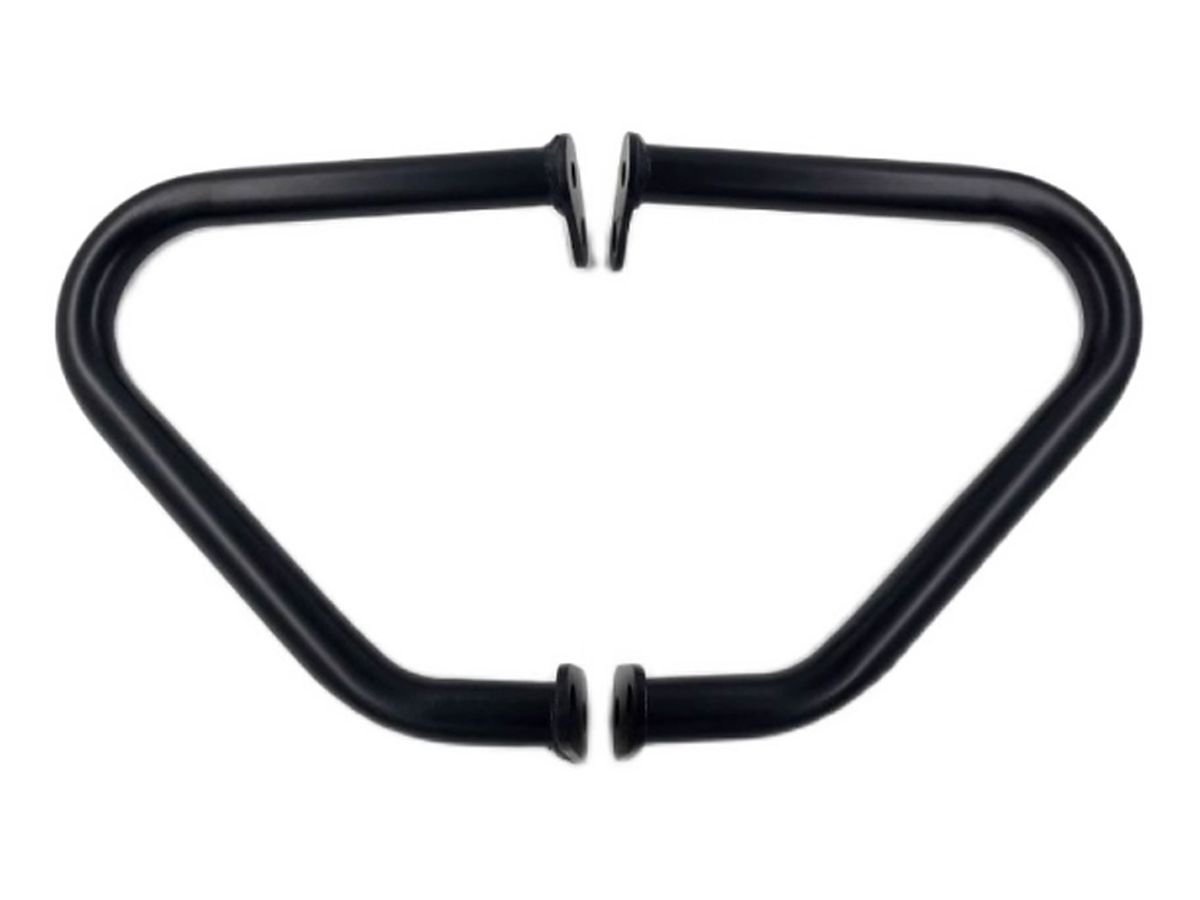
Black powder coated crash bar loop with bracket ends
A closed loop bar with bracket ends — the bend closes on itself, so the last bend has to meet the first.
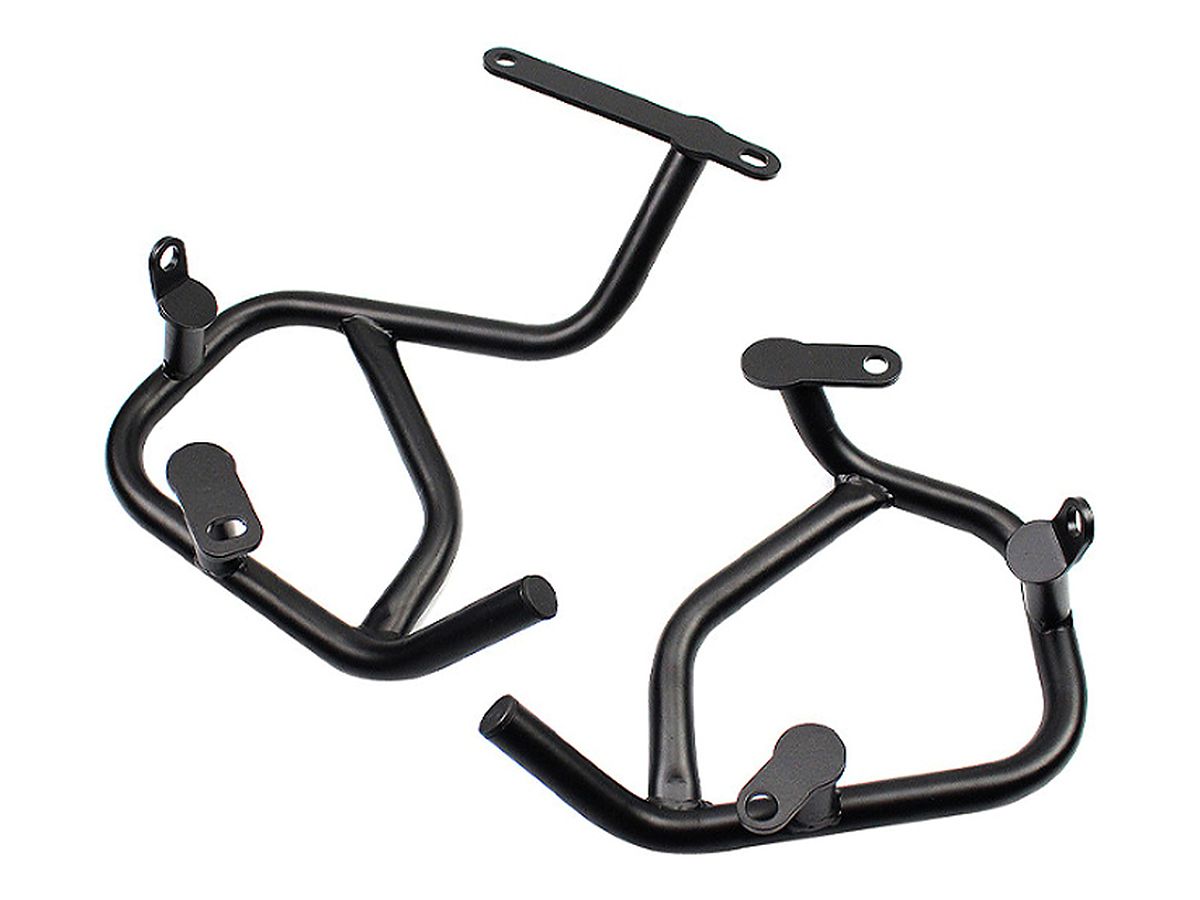
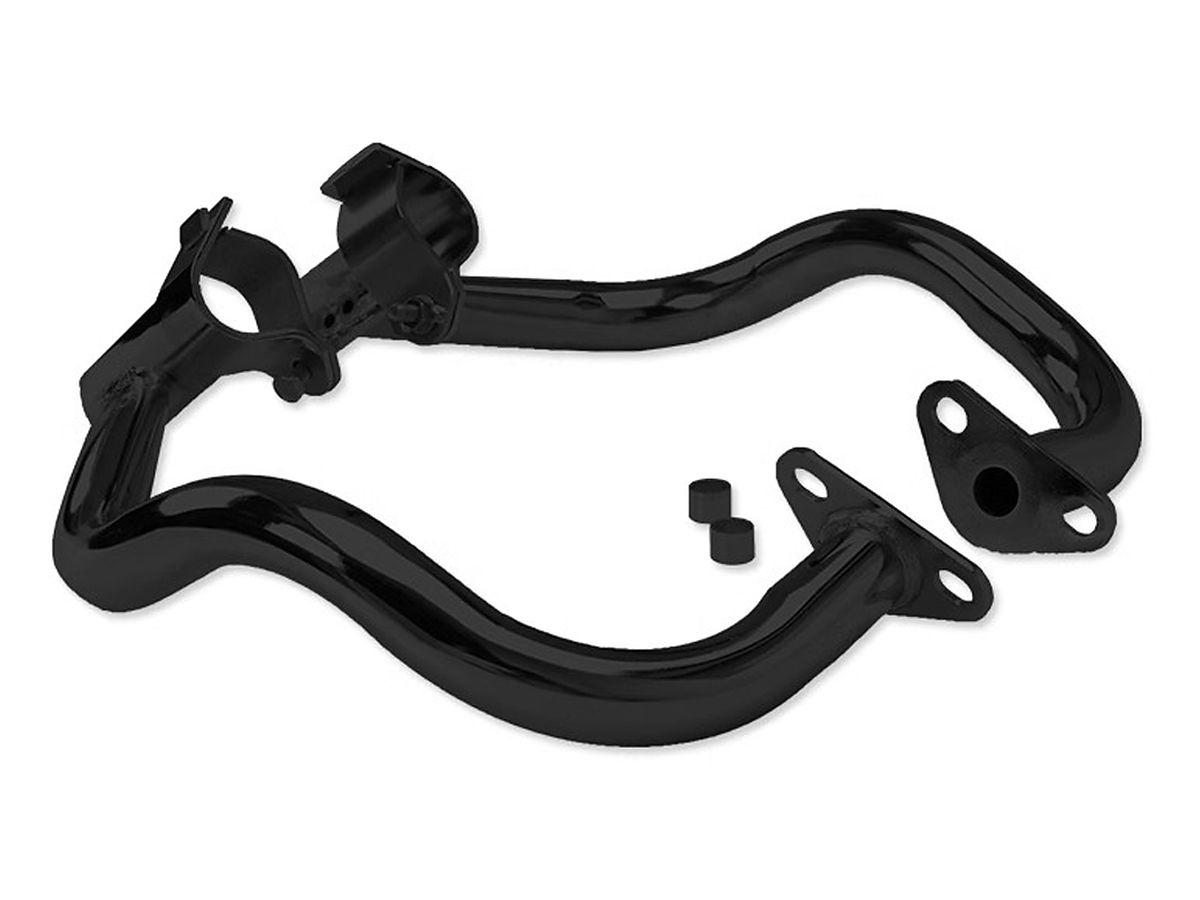
Two bent tube crash bars with welded mounting tabs
Welded mounting tabs, two bars side by side. Tab position is what decides whether it bolts on.

Outside the motorcycleThe same bending and welding, on parts that are not crash bars.

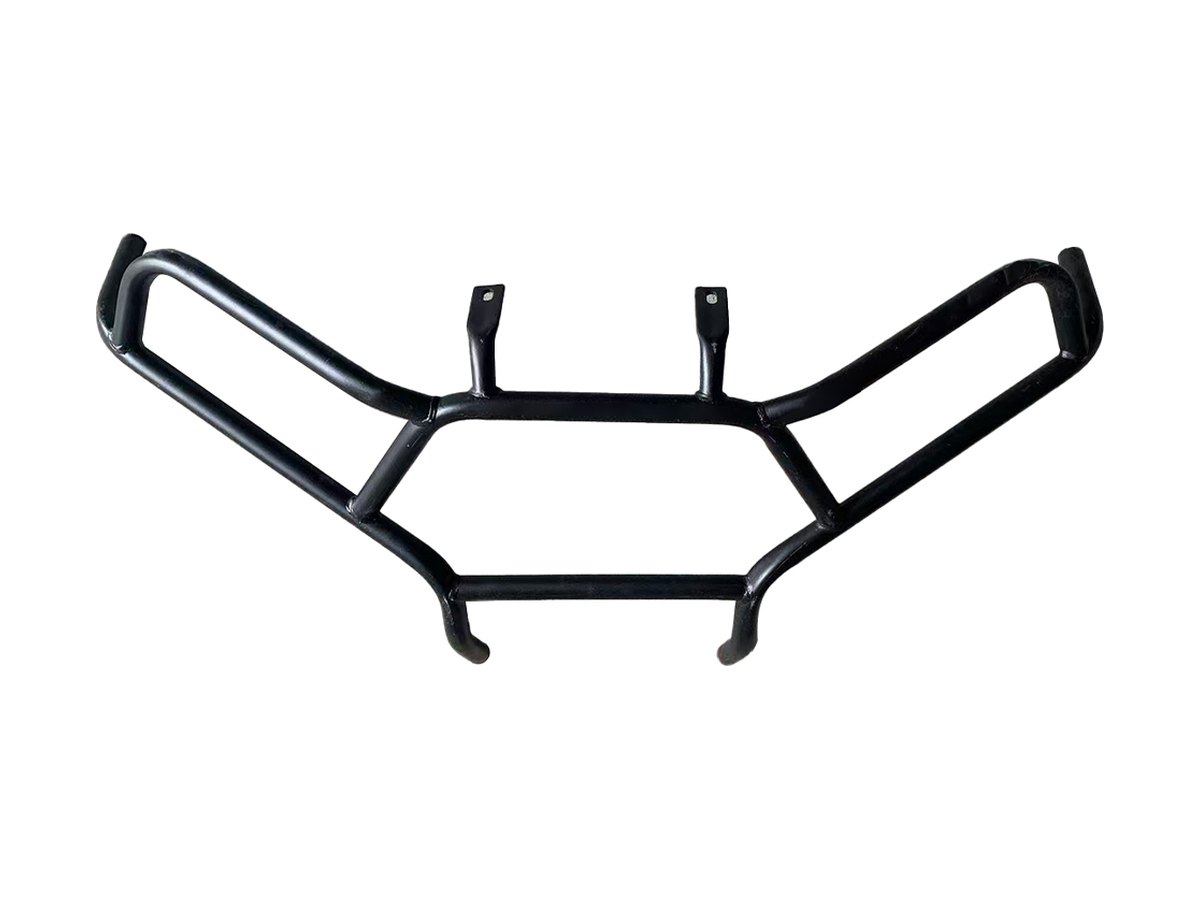
Tubular car front guard bar with welded mounting brackets, gloss black
Car front guard bar, gloss black, welded brackets. Light vehicle accessory, not a crash-safety component.
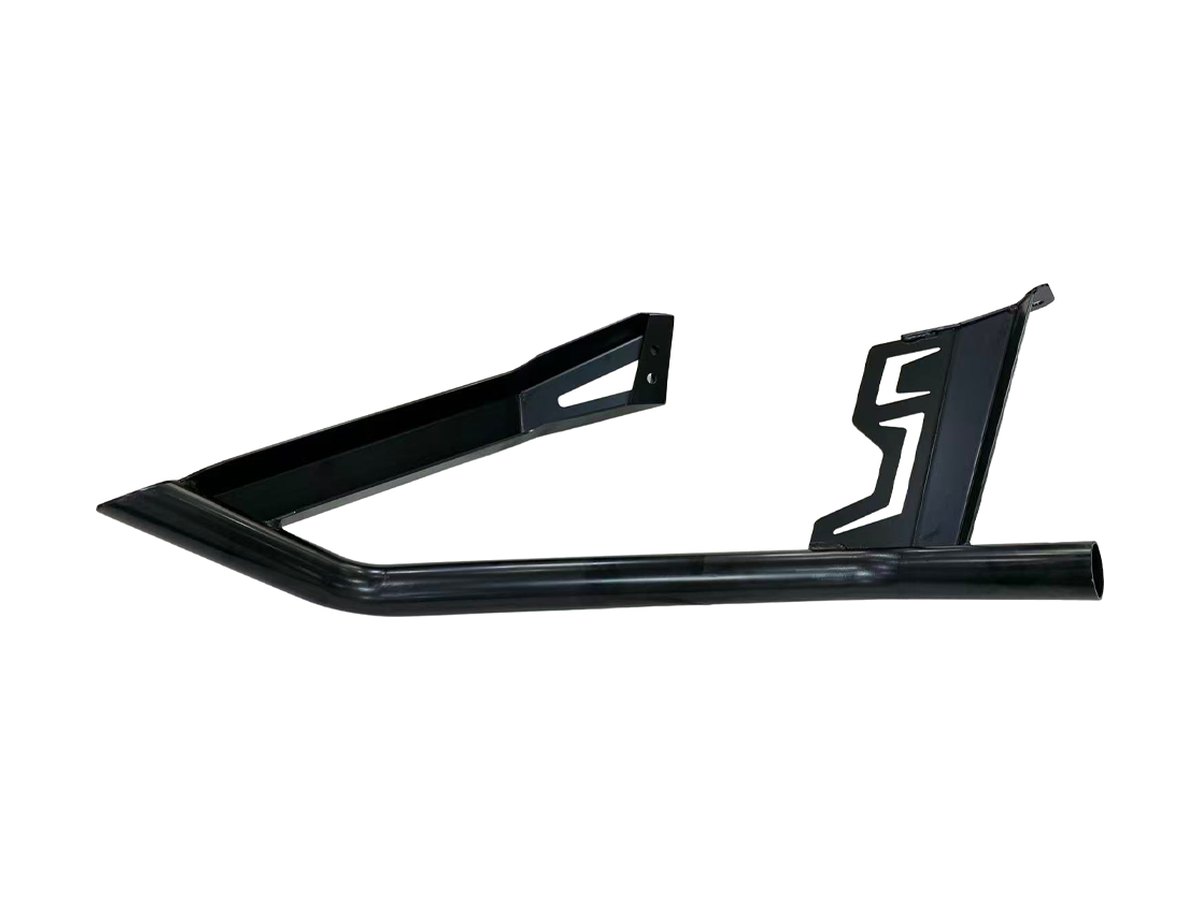
V-shaped tubular car bull bar with laser cut side plates, gloss black
V-shape bull bar with laser cut side plates — tube and plate combined in one assembly.
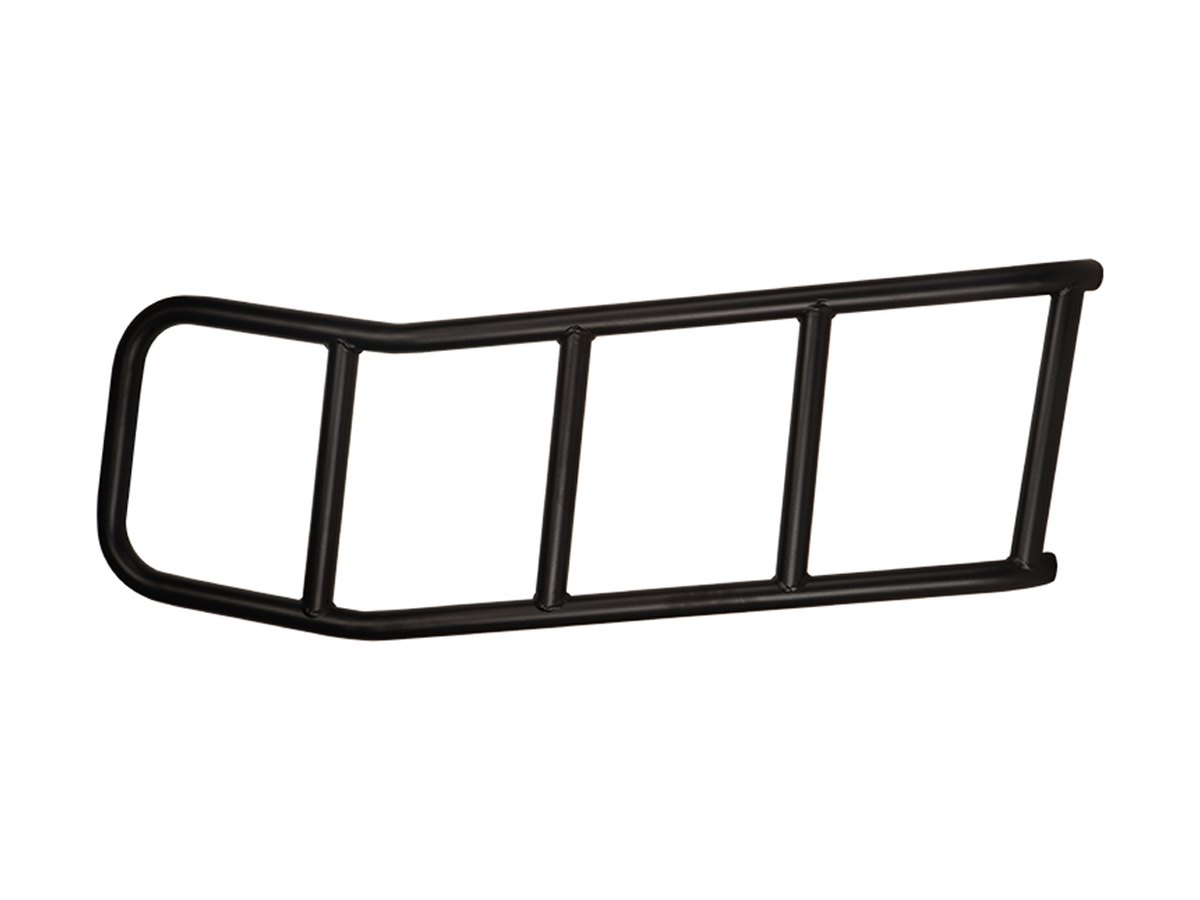
Tubular roof ladder rack welded from bent round tube
Roof ladder rack welded from bent round tube. Long parts show any twist immediately.

Parts where the process is visibleThese four each show a different step: flattening, multiple bends, and a plate joined to a frame.

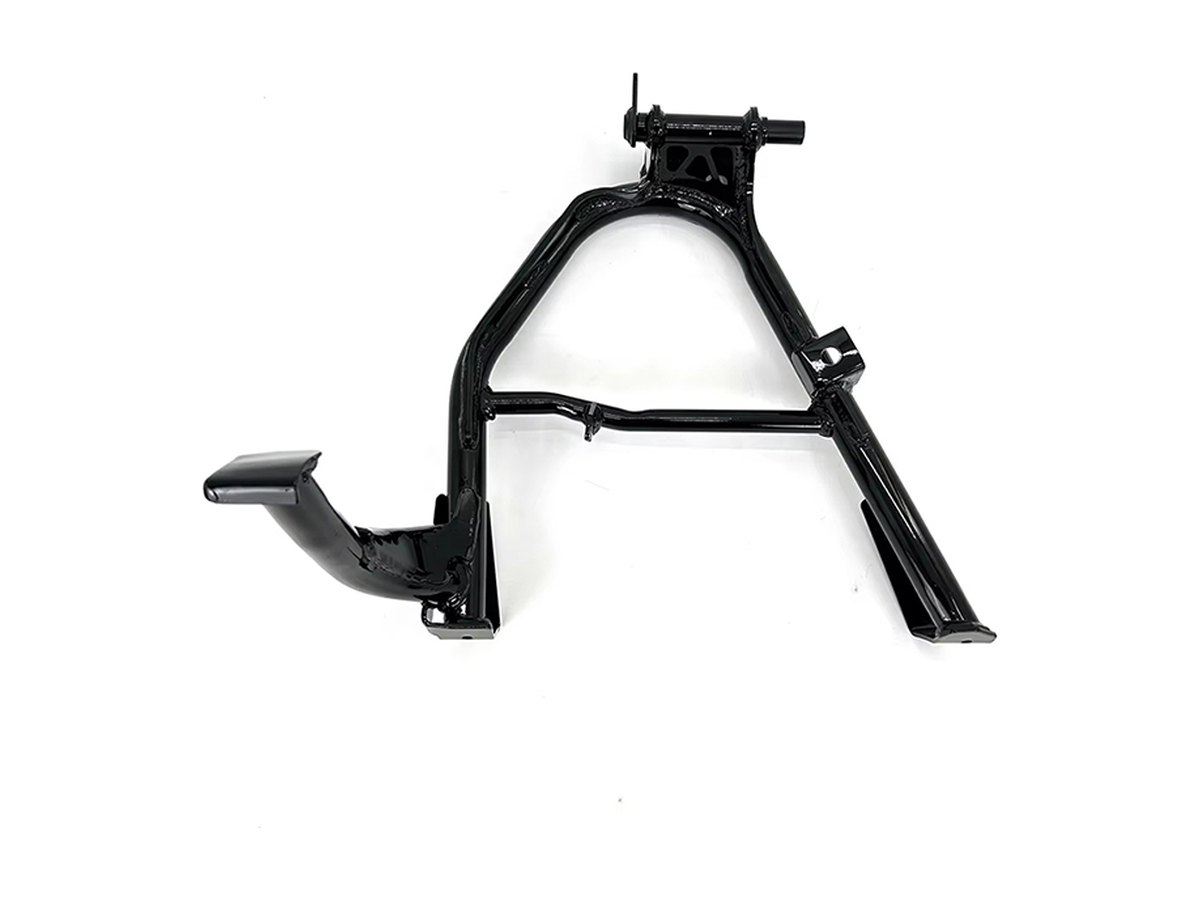
Motorcycle center stand bent from round tube with flattened foot plates and a welded spring pin
Centre stand: the tube is flattened at the foot to make a pad. Pressing a tube flat without splitting it is a forming job, not a bending job.
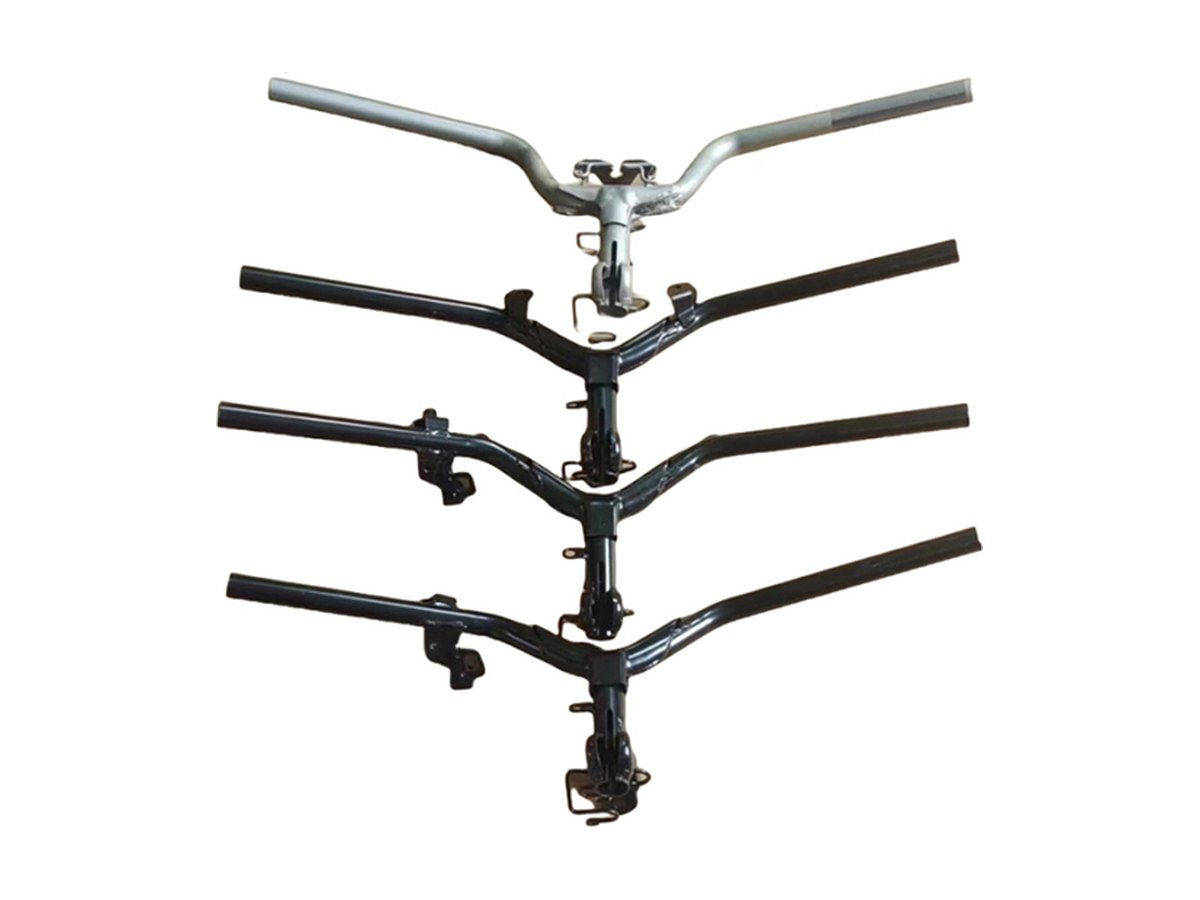
Four handlebar tube assemblies side by side, each bent symmetrically from round tube
Four handlebar assemblies, one photo. This is one family of part, not one product — each bent symmetrically with a welded stand pipe.
Rear luggage rack welded from a bent round tube frame and a laser cut perforated plate
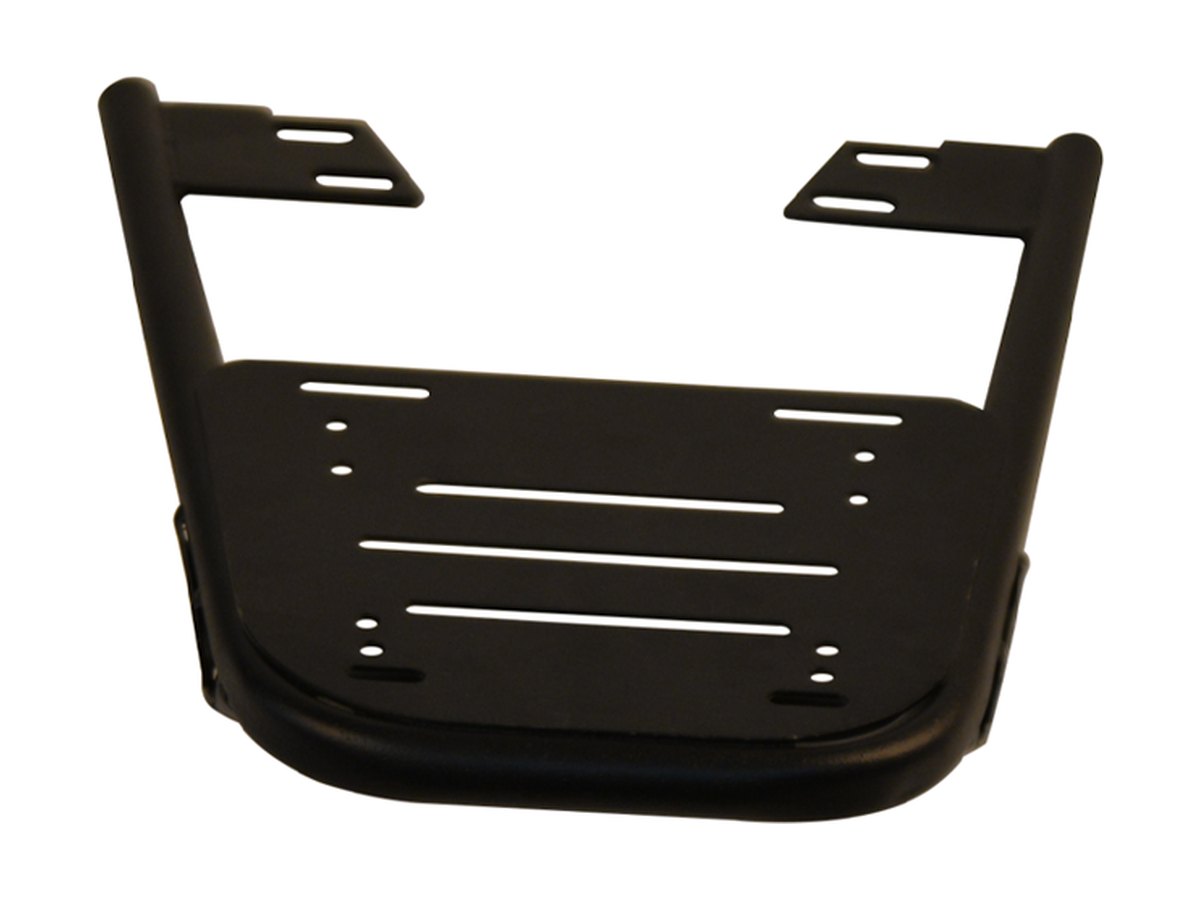
Rear rack: U-bend frame, perforated plate with six long slots, two folded mounting ears, then welded. Four processes in one part.
Pair of stainless steel motorcycle subframes with machined mounting blocks
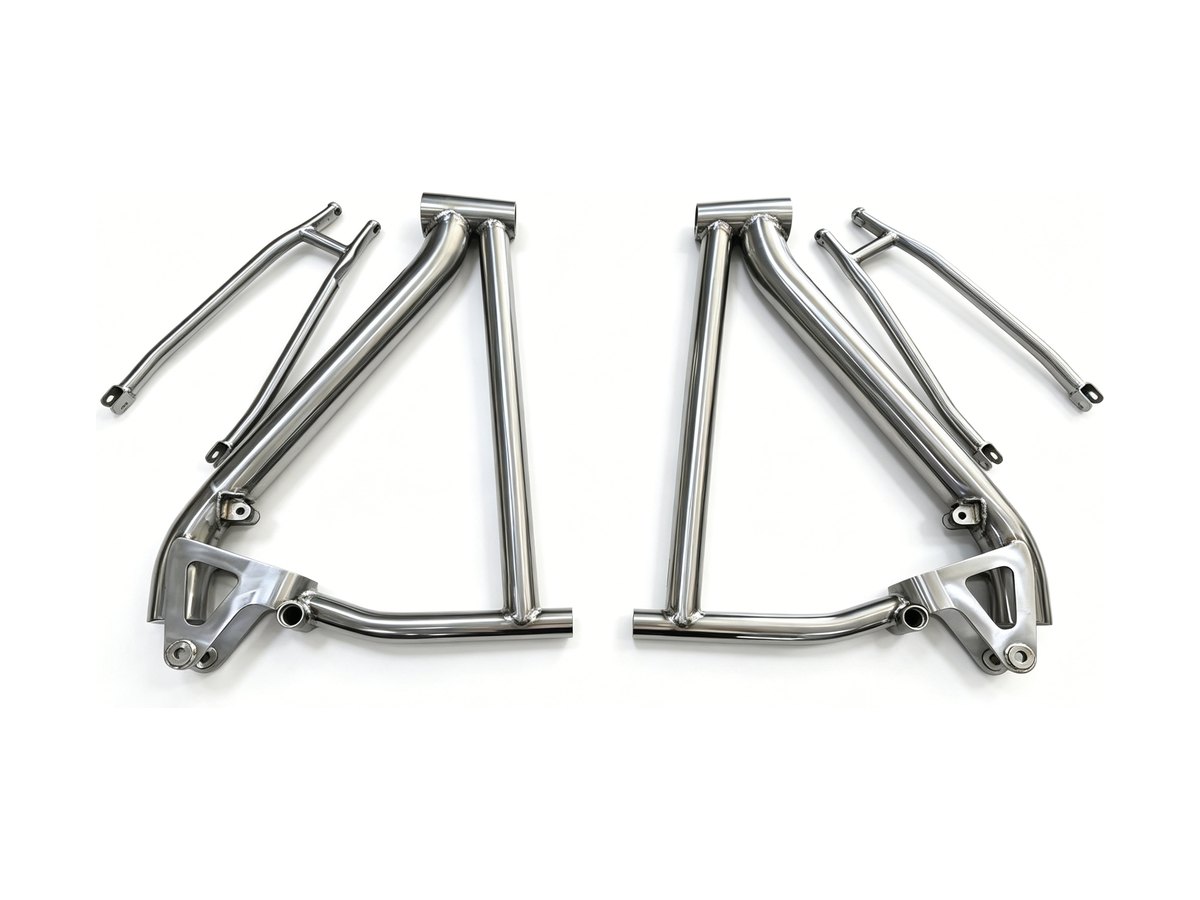
Stainless subframe pair with machined mounting blocks — tube bent, block machined, then welded.
Pair of tubular motorcycle side footrest guards with welded cross bars
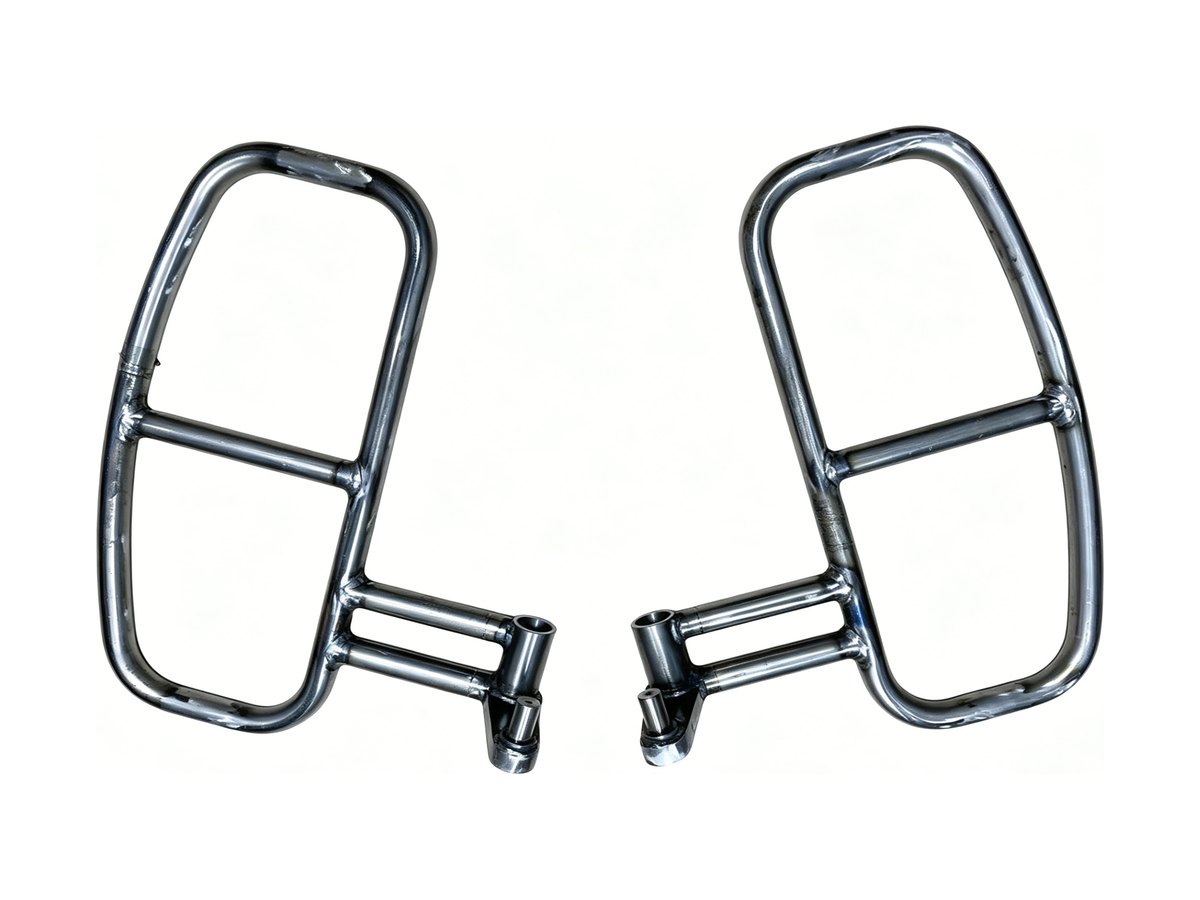
Side footrest guards, welded cross bars, matched pair.

Limits — what we will not take onVehicle parts attract questions we cannot answer, and it is better to say so here.

  1. No safety-critical structural parts. Forks, brake components, steering parts and anything that needs fatigue testing to a standard we cannot certify against.
  2. No IATF 16949. We do not hold IATF 16949, the automotive quality management standard, so we are not a production supplier to a vehicle assembly line. Aftermarket accessories are a different purchase, and they are what this page covers.
  3. No other company's trademark. We do not mould, stamp or print a vehicle brand on a part, and we do not photograph customer branding.
  4. No fitment list. We make to your drawing or sample. We do not publish which model years a bar fits — that judgement is yours.
  5. No complete vehicles. Parts only, no assembly into a rolling chassis and no road-homologation paperwork.
  6. Bending stops at Ø150 mm. Larger tube can be cut here, not bent.
  7. Finish is chosen by you. Grinding, sandblasting and the electrolytic wash are done here; plating and powder coating go to an outside finishing shop, or to yours if you prefer to keep that step in-house. Chrome and mirror polish are quoted per part after we see it.
  8. No price without a drawing. Tube size, wall, bend count and quantity all move the figure.

Our crash bars are untested accessories, not certified crash or rollover protection devices. Fitment, local regulations and riding safety remain the rider's responsibility.

General information only — not engineering advice. Suitability for a specific application, load case or service environment must be confirmed by the buyer's engineer.

Questions from accessory brands and distributors

Can you make crash bars for a specific motorcycle model?
Yes, from a drawing or a sample part sent to us. We make to the geometry you supply. We do not publish a fitment list: a bar that fits one model year often does not fit the next, and the responsibility for fitment is yours.
Do you put brand logos on the parts?
No. We do not apply another company's trademark, and our photographs do not show customer branding. Your own marking can be applied where the process allows it — stamped or laser marked before coating, discussed per order.
What finish do crash bars normally get?
Black powder coating, gloss or matt, is the usual choice for road use. It goes on after all welding. The coating itself is done by an outside finishing shop. If you have your own coater, or coat in-house, the bars can ship bare. Chrome and mirror polish are quoted per part after we see the shape: the inside of a bend and the weld root cannot be reached by a polishing wheel.
How are pairs kept matched?
Both sides are bent on the same die, and the welded brackets are positioned in a fixture rather than marked by hand. Hole position tolerance on welded brackets is quoted from your drawing; where the drawing gives no figure, we use ±1 mm and state it on the report.
What is the smallest order?
One piece for a prototype, so you can test fit before committing to a batch. A new radius or a new fixture at prototype stage adds about two weeks; the prototype itself is 3 days once the tooling exists.

Send the drawing or the sample. We will tell you what the tooling costs in time.

Tube size, wall, the number of bends and how the brackets attach. If a new die or a welding fixture is needed, you hear it in the first reply.

WhatsApp