Panyu District, Guangzhou · Manufacturing since 2013
Tube OD Ø4–150 mm hi@newsiyuantube.com
NewSiyuan TubeTube Bending · Panyu, Guangzhou WhatsApp

Home / Tube Parts / Coils

Bent and Coiled Tube for Refrigeration and Heating | Ø4–50 mm, Coil to 800 mm

We form tube into coils and U-bends for refrigeration, heating and heat-exchange work: helical coils wound to an outside diameter of up to 800 mm, return bends, and multi-bend runs, in copper, 304 stainless and carbon steel. The tube range on this work is Ø4–50 mm — narrower than the Ø4–150 mm the rest of the workshop bends, because the coil diameter and the wall decide it. Made to drawing in Panyu, Guangzhou since 2013, one piece minimum.

What is on this pageFormed tube. Not the finned assembly.

Tube rangeØ4–50 mm outside diameter, wall 0.8–5 mm. This is the range for coil and U-bend work specifically — the workshop bends up to Ø150 mm on straight and open parts.
Coil sizeHelical coils up to 800 mm outside diameter.
MaterialCopper, 304 stainless, carbon steel.
FormsHelical coils, U-bends (return bends), multi-bend runs.
What decides acceptanceRing diameter repeatable from turn to turn, no flattening at the bend, and ends square, deburred and closed.
Not includedFins, fin stacking, headers and manifolds, brazed assemblies, pressure or leak testing.

The word coil covers two different purchases. A coil winder supplies formed tube; a heat-exchanger shop supplies a finned, brazed, tested assembly. This page is the first, and saying so early saves a quotation round.

The ring diameter is the number to agree firstA coil is not one bend. It is the same bend, repeated, and every turn has to land on the same diameter.

On a single bend, springback is one error the die already compensates for. On a coil, that error repeats at every turn, and a coil that starts at 780 mm and finishes at 800 mm is scrap — not because any single turn is wrong, but because the two ends no longer line up with whatever the coil sits inside.

Stainless and copper behave differently at the same radius — copper work-hardens and needs a different die approach. The forming range for open parts is on tube bending services.

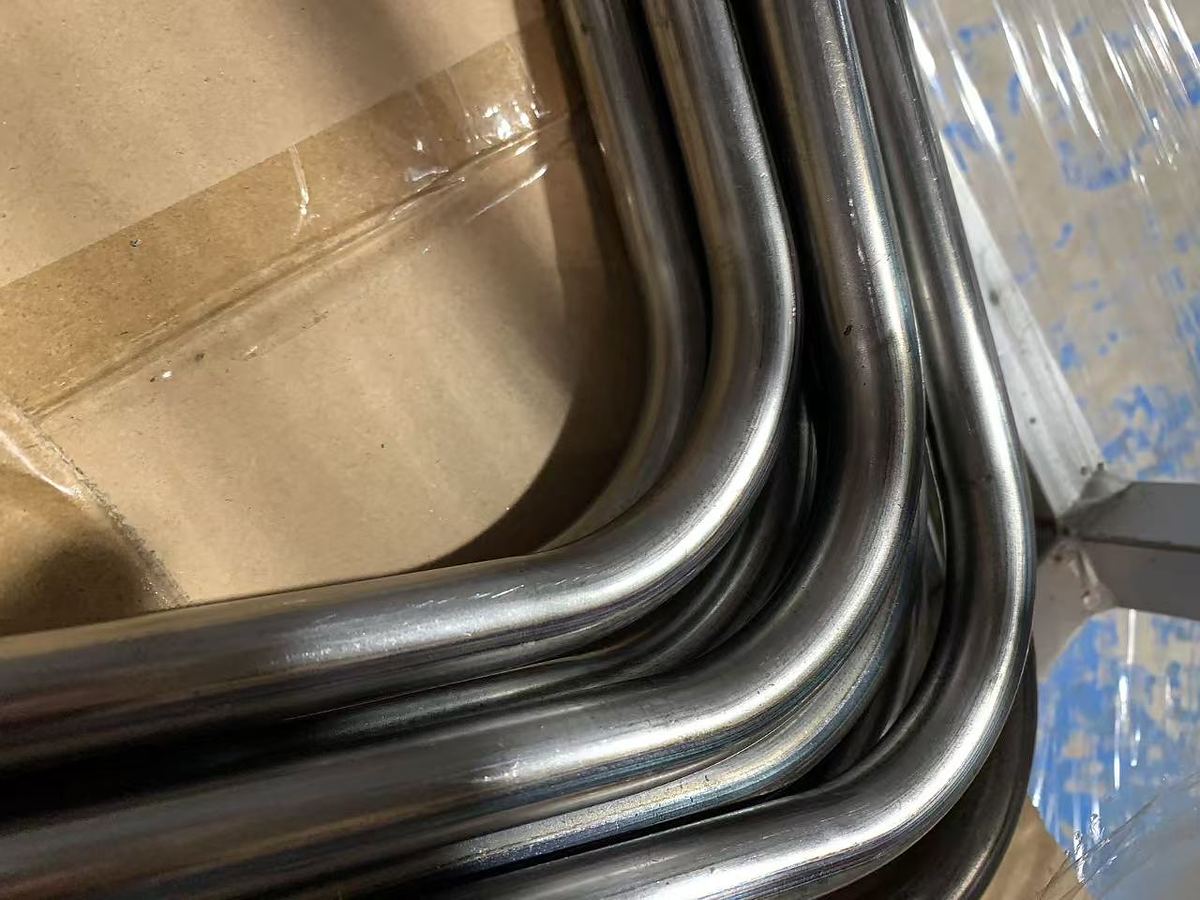
Two formed partsA multi-turn coil, and a batch of U-bends seen from the inside radius.
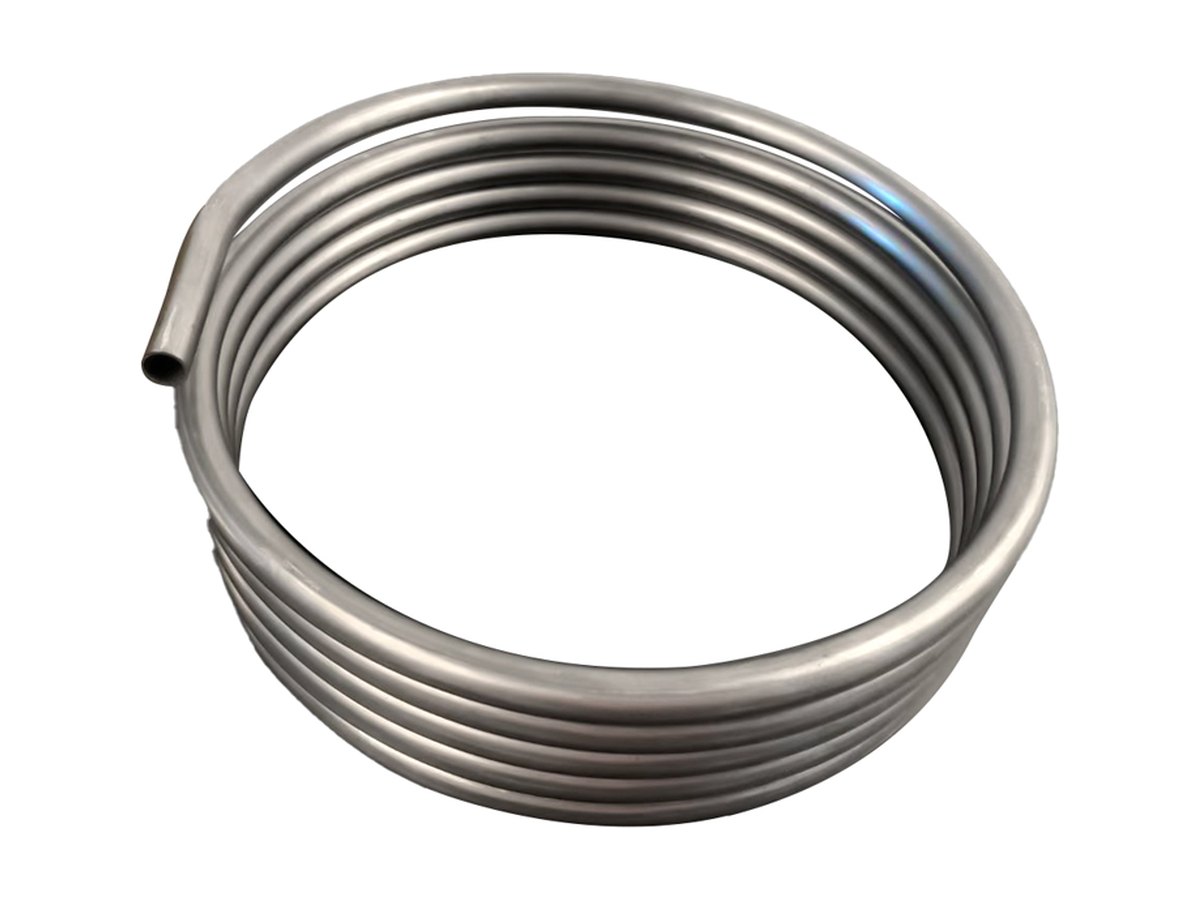
Stainless steel tube bent into a multi-turn coil with a consistent ring diameter
Stainless tube formed into a multi-turn coil. The ring diameter holds because the form does, not because each turn is measured.
Stainless steel bent tubes seen from the inside radius, radius held uniform across the batch
U-bends from the inside radius. Across a batch this is where a radius either repeats or drifts.

Packing and what leaves the workshopA coil that arrives out of round is scrap even if it was perfect on the bench.

Testing is the question that decides whether this is the right supplier. If your drawing calls for a pressure or leak test, say so in the first message and the scope is agreed before the order — it is not assumed in either direction.

Limits — what we will not take onA coil enquiry looks simple and is not, so the edges are stated plainly.

  1. Coil outside diameter stops at 800 mm. Larger coils are not made here.
  2. The coil tube range is Ø4–50 mm. The wider Ø4–150 mm range applies to open and straight parts, not to coils.
  3. No finned coil assembly. No fin stacking, no tube expansion into fins, no complete heat exchanger.
  4. No headers or manifolds brazed here, and no brazed sub-assemblies.
  5. No pressure, leak or cleanliness certificate by default. The forming scope is tube geometry. Any test is agreed before the order and is not issued as a matter of course.
  6. No refrigerant or oxygen service approval. Cleanliness for a specific gas is not certified here.
  7. No price without a drawing. Tube size, coil diameter, number of turns and end treatment all move the figure.

Formed tube is supplied to your drawing and dimensions. Thermal performance, pressure rating and suitability for a specific refrigerant or system are the system designer's responsibility, not a claim made here.

General information only — not engineering advice. Suitability for a specific application, load case or service environment must be confirmed by the buyer's engineer.

Questions from refrigeration and heating equipment makers

What is the largest coil you can wind?
An outside diameter of 800 mm, with tube from Ø4 to Ø50 mm. The two limits interact: a 50 mm tube at 800 mm and a 6 mm tube at 800 mm are different jobs, so the drawing decides. Below 800 mm the limiting factor is usually the bend radius against the wall, not the coil size.
Do you bend copper tube?
Yes, copper from Ø4 to Ø50 mm for coil and U-bend work. Copper work-hardens at the bend and needs a different die approach from stainless. Tell us the temper when the drawing goes out, because soft and half-hard do not form the same way.
Do you pressure test or leak test the coil?
Not by default. The forming scope here is tube geometry — cutting, bending, coiling and end preparation. If your drawing needs a pressure or leak test, say so in the first message. The scope is agreed before the order rather than assumed in either direction, and a test certificate is a separate document from our dimensional report.
Can you supply U-bends on their own, without a coil?
Yes. Return bends are made as separate parts at a fixed radius, in the same tube range. Radius, leg length and end treatment are the three things the drawing has to state; the rest follows from them.
What is the smallest order?
One piece, so the coil diameter and the end fit can be checked before a run. A run is 25–40 days. A sample is 3 days with tooling already on the rack; a new radius or a new form adds about two weeks.

Send the coil drawing: tube size, wall, coil diameter, turns.

Those four numbers say whether the coil is workable here. End treatment and any testing requirement come next.

WhatsApp