Home / Tube Bending / Small Batch, MOQ 1
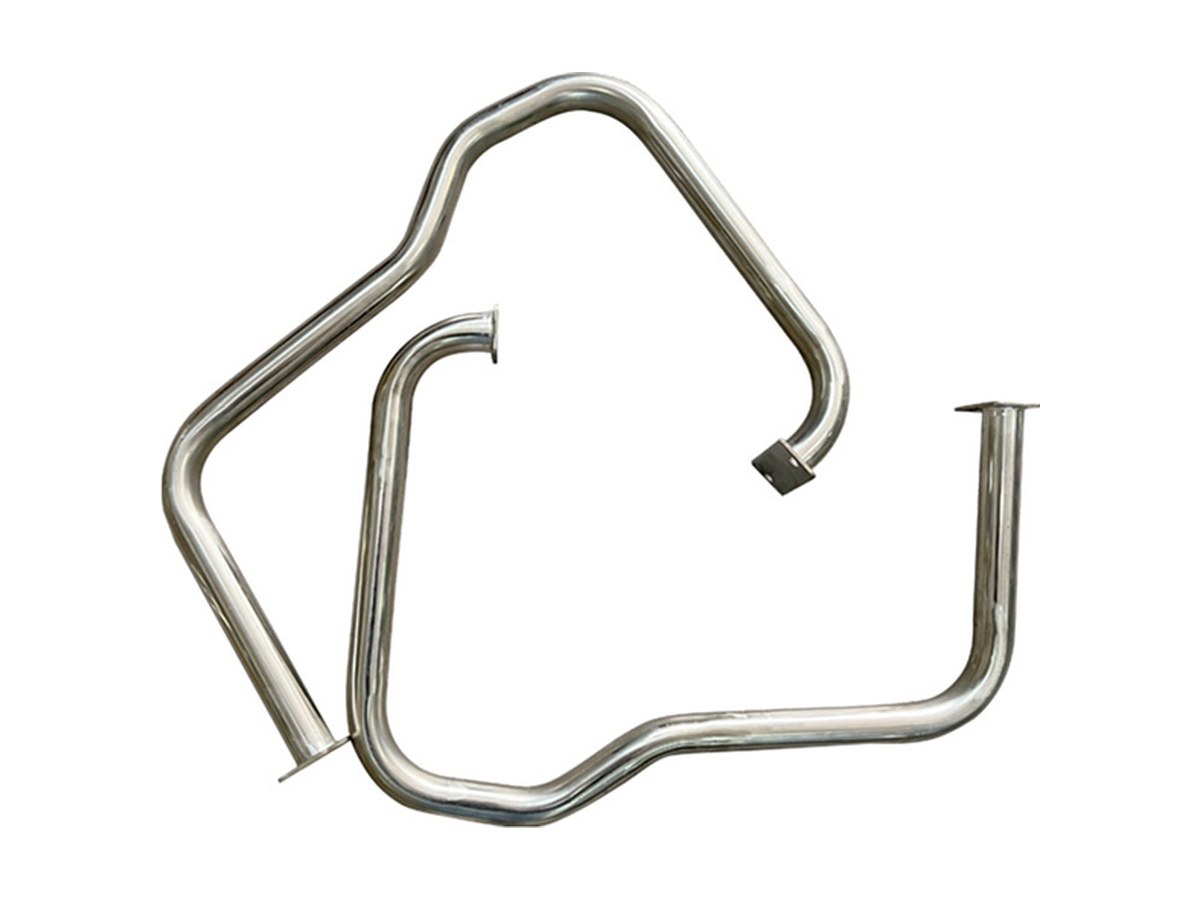
The minimum order for a custom bent tube here is one piece, from Ø4 to Ø150 mm outside diameter in carbon steel, 304 or 316L stainless and aluminium. A sample takes 3 days provided the die you need is already on our rack, and a production run of 25–40 days that can be split into batches. We are NewSiyuan Tube in Panyu, Guangzhou. This page explains what one piece actually covers, what decides the date, and the cases where buying one piece is the wrong decision.
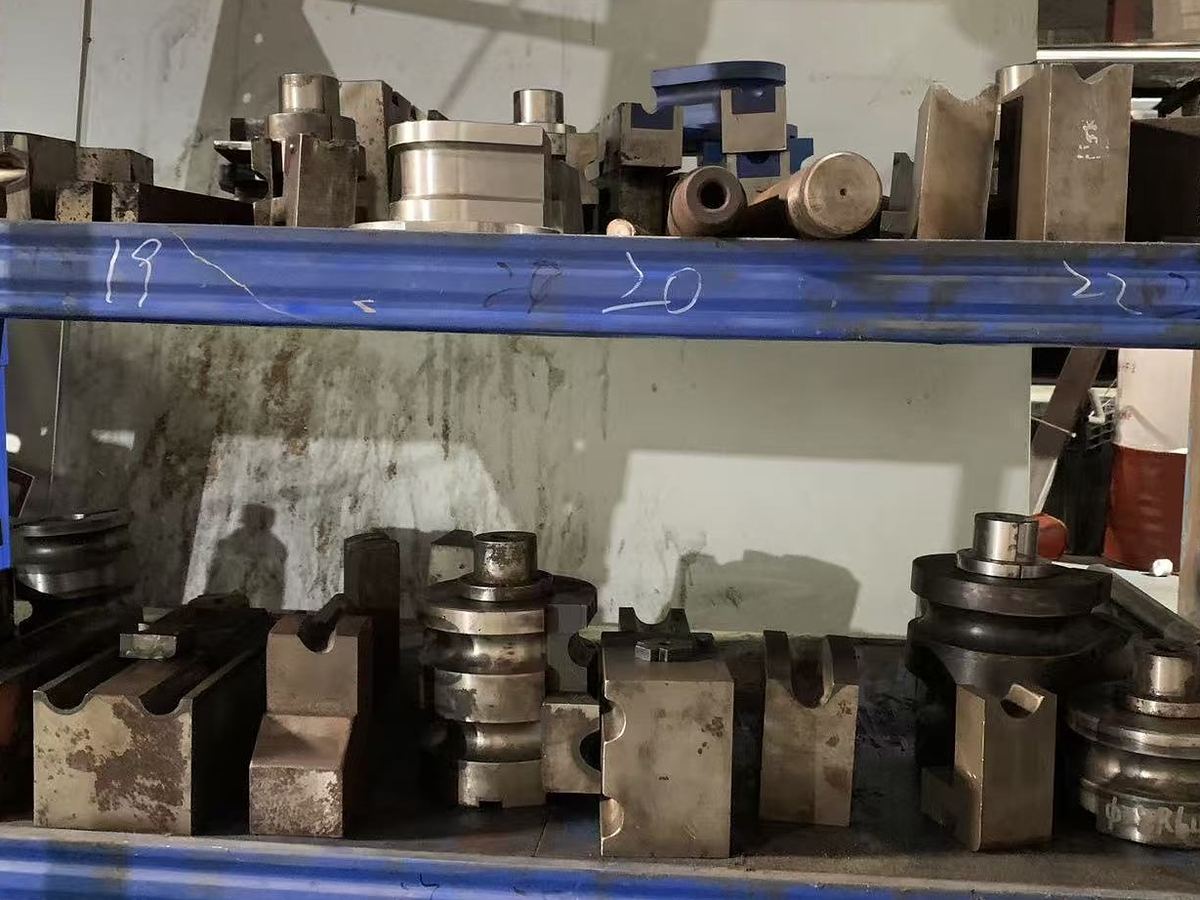
Almost every factory that quotes a minimum of a hundred or a thousand is covering the same thing: the time to put a die in a machine, set the angle, run a trial piece, measure it and adjust. That cost does not scale down when the order does. A workshop that already holds a die of your radius has paid that cost years ago, which is why a single piece is possible here and not at a shop that would have to make the tooling from scratch.
| What one piece covers | One finished part bent to your drawing, measured, with a dimensional report if you ask for one at quotation. |
|---|---|
| What it does not cover | Consistency across a run. One piece proves the tooling can produce the shape, not that the tenth and the hundredth will still hold it. |
| Quantity above one | Any number. Runs in the tens and low hundreds are ordinary production here, priced per piece on the same set-up. |
| Batching | A production order can be split so part of it ships earlier — useful when one assembly is holding up a build. |
One piece is the minimum for bending. It is not a promise that every part is economical at one piece: a part that needs new tooling carries that tooling in the price, and at quantity one the tooling is most of the invoice. That is a pricing fact, not a policy.
The 3-day figure is not an average or a best case — it is a specific case with two conditions attached. When both hold, three days is realistic. When either fails, the date moves by a known amount, and it is better to know which one applies before you plan around a date.
| Die on the rack, material in stock | 3 days to a sample. The eight bending machines cover five diameter classes: Ø150 ×1, Ø90 ×2, Ø63 ×2, Ø32 ×2, Ø20 ×1. |
|---|---|
| Material not in stock | 7–10 days to bring the tube in before bending starts. Grade and wall both matter — "stainless" is not a purchasing instruction. |
| New die required | About 2 weeks to make the tooling. A radius outside the range already on the rack is the usual reason. |
| Then the first article | 3–5 days after the tooling is ready, bent, measured and reported before anything else runs. |
| Production run | 25–40 days after sample approval, splittable into batches. |
A single piece is the right purchase when the question is "does this shape fit my assembly". It is the wrong purchase when the question is "will this shape still fit on the last unit of a run". Those are different questions, and they are answered by different quantities.
| "Will it fit?" | One piece. Measure it against your fixture, adjust the drawing if needed, then order. |
|---|---|
| "Will it fit every time?" | A small run — ten to thirty pieces — with the first and the last measured. That is where die wear and springback drift show up. |
| "Can we assemble it at rate?" | A pilot batch at the quantity you actually build in a week, not a larger one. A pilot that is too big hides the handling problem you were looking for. |
| "Is the process capable?" | Neither. That is a question for a dimensional study over a run, and it starts with a conversation about which dimensions are critical. |
If the answer to any of those is unclear, say so in the enquiry. The quantity that gets quoted then matches the question you are actually asking, which is usually cheaper than discovering it after the batch arrives.
Being able to buy one piece is not the same as it being sensible to. These are the cases where the arithmetic or the physics points somewhere else, and they are worth recognising before the enquiry rather than after the quotation.
| 1. The part needs new tooling | At quantity one, the tooling is most of the invoice. If the part is going into production later, say so at quotation and the tooling line is dealt with in the quotation rather than discovered at the end. |
|---|---|
| 2. The part is a bare tube with one bend | Nothing wrong with it, but there may be a stock bent fitting of the same radius that costs less than the set-up. Worth checking before the drawing is finalised. |
| 3. The design is still moving | Every revision that changes a radius restarts the tooling question. Freeze the radius and the bend angles first, then prototype. Dimensions that move are usually the tangent lengths, not the radius. |
General information only — not engineering advice. Suitability for a specific application, load case or service environment must be confirmed by the buyer's engineer.
One piece and a pilot batch are quoted differently. Saying which you want at the start saves a round.