Panyu District, Guangzhou · Manufacturing since 2013
Tube OD Ø4–150 mm hi@newsiyuantube.com
NewSiyuan TubeTube Bending · Panyu, Guangzhou WhatsApp

Home / Tube Parts / Medical & aesthetic

Tube Brackets and Handles for Medical and Beauty Equipment

We bend and weld the tube structure of medical and beauty equipment: equipment stands and trolley frames, monitor and lamp brackets, armrests, grab handles and foot step frames. Tube Ø4–150 mm, wall 0.8–5 mm, in 304 or 316L stainless, aluminium or coated carbon steel. These are structural parts — they carry the device, they do not touch the patient. Made to drawing in Panyu, Guangzhou since 2013, one piece minimum.

What is on this pageThe frame that holds the device up, not the device.

Material304 stainless for frames that are wiped down; 316L where chloride cleaners are used; aluminium where the frame is lifted or carried; carbon steel, powder coated, for fixed furniture.
Typical partsEquipment stands and trolley frames, monitor and lamp brackets, armrests, grab handles, foot step frames, screen mounts, cable trays formed from tube.
What decides acceptanceA left and a right part matching, no sharp edge or weld spatter anywhere a hand goes, and tube ends deburred and closed rather than left open.
DocumentsEN 10204 3.1 is available on request and is issued by the steel mill. What this workshop issues is its own dimensional report against the drawing.
What this workshop is notNot a medical device manufacturer. The device approval, the technical file and the clinical claims belong to the customer.

The document row matters more here than on most pages, because a buyer's own quality system will ask for it. It is worth reading the documents page before a supplier questionnaire is filled in.

The part that touches the patient is not this partOne sentence of scope that decides whether the paperwork becomes possible.

A bracket that holds a lamp, a frame that carries a trolley, a handle a practitioner puts a hand on — these are structural components of a machine. They are not in contact with the patient, not sterile, and not part of the treatment. That is the line this workshop works on, and it is what makes the job ordinary metalwork rather than a regulated device build.

The full position on certifications — what exists, what expired and what is never claimed — is on quality and inspection.

Handles are judged by hand, not by drawingA rough weld that passes inspection is still a rejected part.
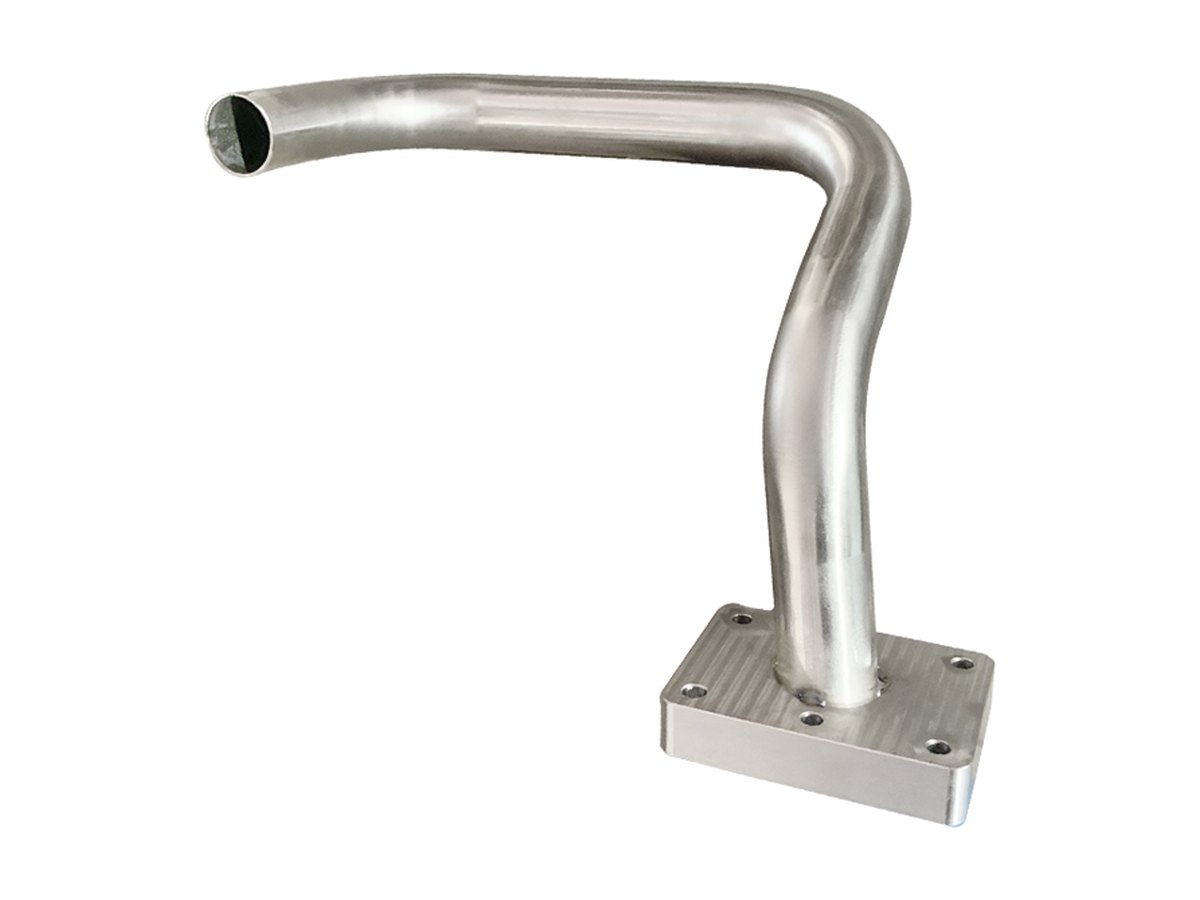
Bent stainless steel handrail post with welded base plate
A bent stainless post with a welded base plate. The weld at the base is out of reach of a hand; the bend is not.
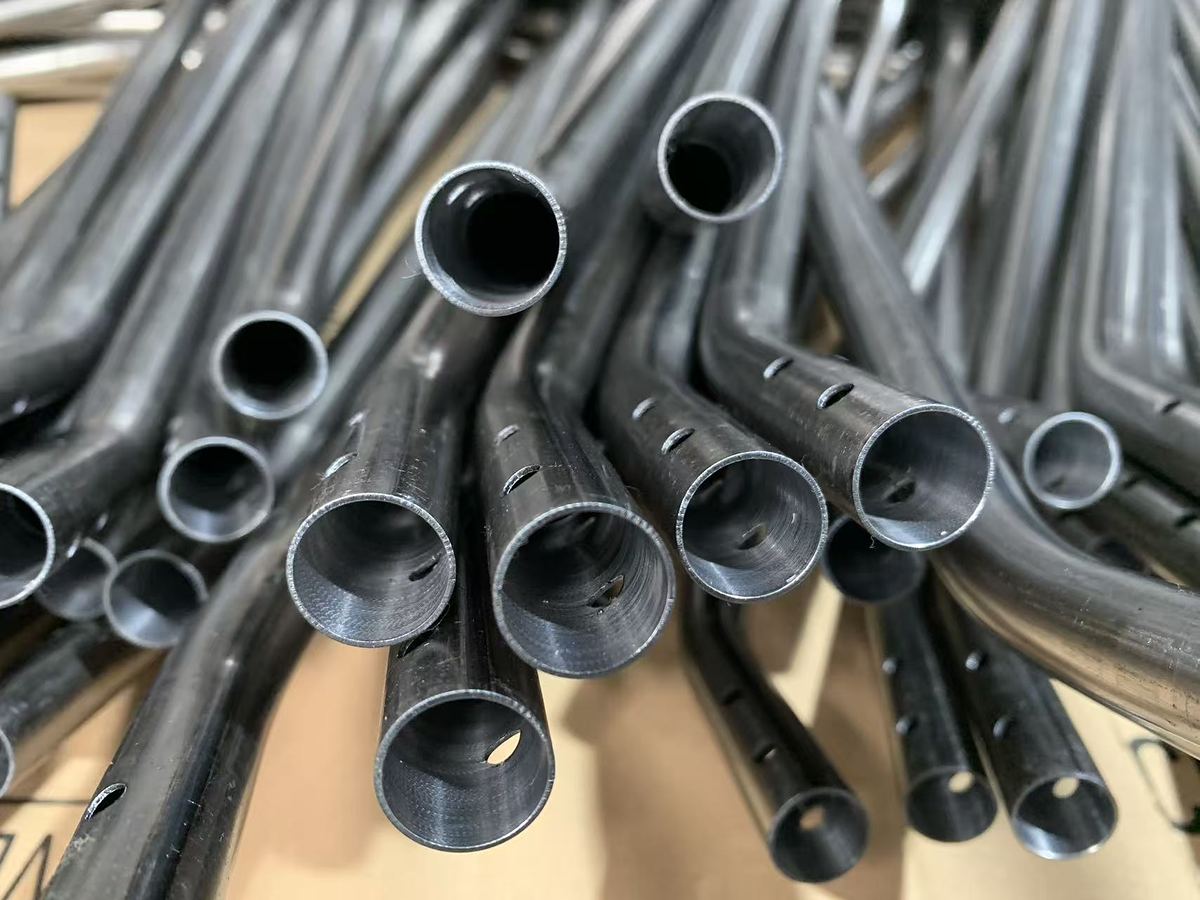
Tube bent at two radii — 1.2 mm wall visible at the cut end, drilled on both sides
Tube ends cut and drilled, wall visible at the section. On a handle, an open end is a place a hand finds.

Deburring, weld dressing near a hand-contact surface and the electrolytic wash are done here. Mirror polish and plating go to an outside finishing shop.

How a first order runsSample, fit, then batch — the same sequence as every other part on this site.

Limits — what we will not take onMedical work is where a vague answer costs the most, so the line is drawn here.

  1. No body-contact or implanted parts. Nothing that goes inside a patient or against skin for treatment. Structural frames, brackets and handles only.
  2. No ISO 13485 and no medical device technical file. We are a metal workshop making components to drawing, not a device manufacturer.
  3. No sterilisation validation, no biocompatibility testing, no cleanroom packing. None of the three is offered here.
  4. No electrical or bought-in components. Lamps, motors, castors, controllers and covers are the customer's scope.
  5. No mirror polish or plating in house. Both go to an outside finishing shop.
  6. Bending stops at Ø150 mm. Larger tube can be cut here, not bent.
  7. No price without a drawing. Tube size, wall, bend count and quantity all move the figure.

Parts made here are structural components supplied to your drawing. Fitness for the device, its regulatory classification and its clinical use remain the device manufacturer's responsibility.

General information only — not engineering advice. Suitability for a specific application, load case or service environment must be confirmed by the buyer's engineer.

Questions from equipment makers and distributors

Do you make medical devices?
No. We make the tube structure of the equipment — stands, brackets, armrests and handles — to the device maker's drawing. The device approval, the technical file and any clinical claim belong to the customer. This workshop does not hold ISO 13485 and does not present itself as a medical device manufacturer.
Should the frame be 304 or 316L?
304 for equipment wiped down with ordinary cleaners; 316L where chloride-based disinfectants are used or where the frame sees a wet environment. Both bend the same way on the same machines. The choice is about the cleaning agent and the environment, not about the bending.
Can you supply an EN 10204 3.1 certificate?
A 3.1 certificate is available on request, and it is issued by the steel mill rather than by this workshop. What this workshop issues itself is a dimensional report against the drawing. The two documents are different things and buyers sometimes ask for one expecting the other.
Can you supply small numbers for a pilot build?
Yes — one piece is the minimum, and pilot quantities are a normal order here. A new die or fixture adds about two weeks; the parts themselves are 3 days once the tooling exists.

Send the drawing and mark the surfaces a hand touches.

That one annotation is what decides how the welds are dressed and what the part costs to finish.

WhatsApp