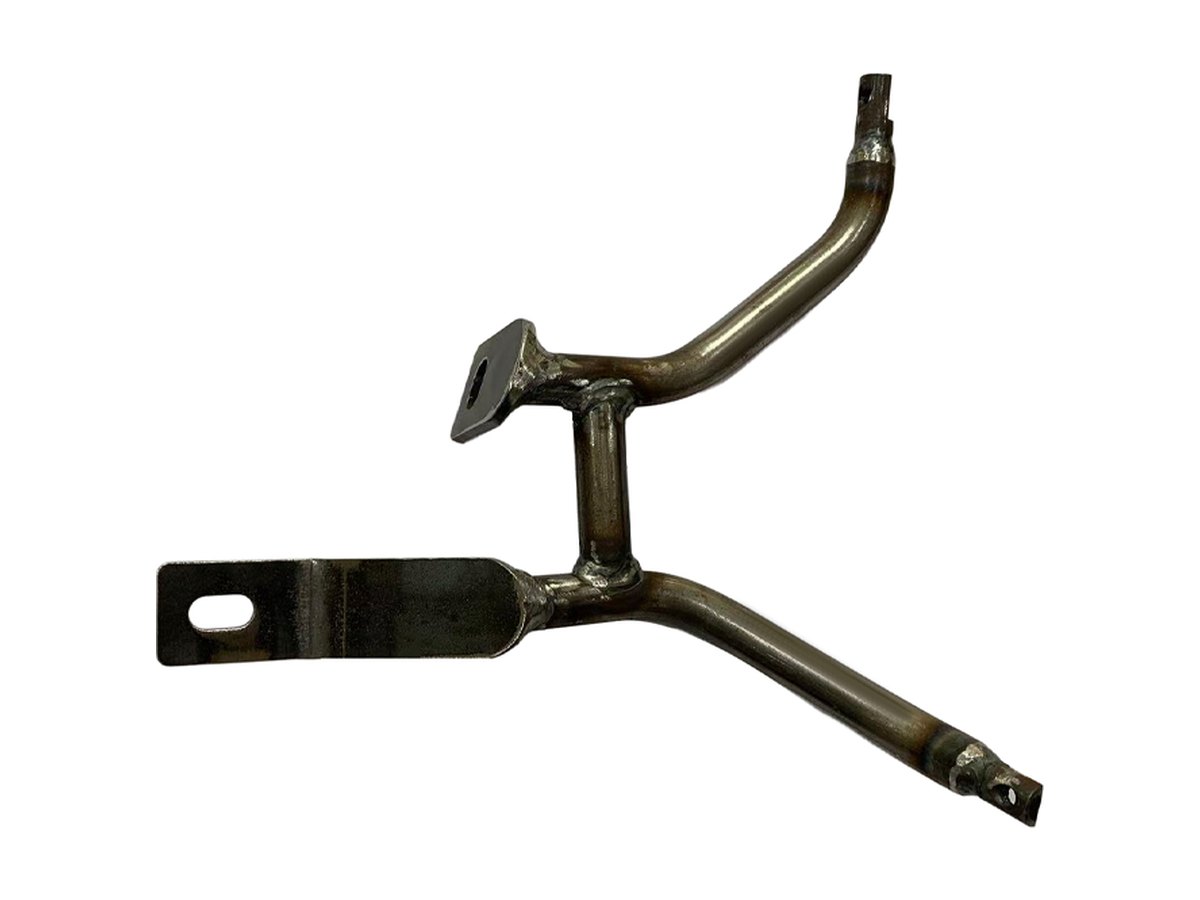
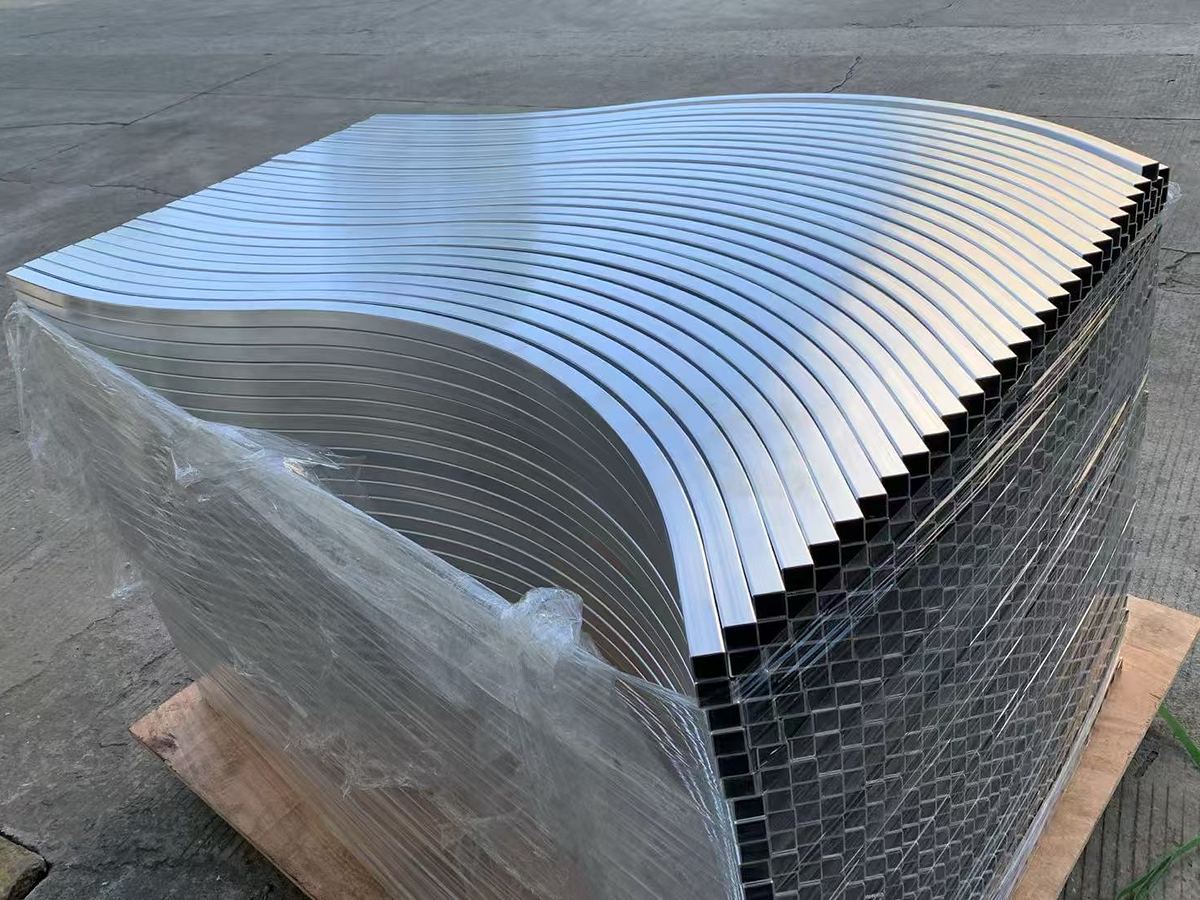
Two parts that show the methodA welded bracket, and square tube bent to a large radius.
Home / Tube Parts / Drone frames
We bend aluminium tube for drone and UAV airframes: arms, landing gear legs, payload and gimbal brackets, and the tube spars and struts used on gliders and light low-altitude equipment. Tube Ø4–150 mm, wall from 0.8 mm, in 6061, 6063 and 7075, welded to laser cut plates where a part needs a flat mounting face. Made to drawing in Panyu, Guangzhou since 2013. One piece minimum, 3 days for a sample with tooling already on the rack.
| Material | Aluminium 6061, 6063 and 7075. Some tempers are annealed before bending — 7075 is the grade that most often needs it. |
|---|---|
| Typical parts | Airframe arms, landing gear legs, payload and gimbal brackets, motor mount plates welded to tube, glider spars and struts, frame plates joined to tube. |
| What decides acceptance | Weight, hole positions, and whether the part is straight where the drawing says straight. |
| The trade-off | Thin wall is what makes the weight, and it is also what moves after welding. Both sides of that trade are visible in the quote. |
| Not included | Carbon fibre, composite layup, electronics, wiring, motors, flight controllers. |
A 1 mm wall tube is bent here. Below 0.8 mm the wall thins too much on the outside of the bend to be worth quoting, and that answer comes in the first reply.
A thick-wall tube bends predictably: the mandrel holds the section, the outside of the bend thins a little, and the part springs back by an amount the die already accounts for. Take the wall down to 1 mm and each of those three things gets worse at once — the section ovalises, the outside wall thins further, and springback becomes sensitive to which heat of material the tube came from.
The general range — diameters, walls, the eight bending machines by class — is on tube bending services. What a bend does to a wall is on bending tolerances.
Parts can be supplied bare, or with an outside finishing shop's anodising or coating arranged on your behalf. Passivation and anodising are not done in this workshop.
Parts made here are manufactured to your drawing. Suitability for flight, payload, endurance or any regulatory category is the buyer's engineering and approval responsibility.
General information only — not engineering advice. Suitability for a specific application, load case or service environment must be confirmed by the buyer's engineer.
That is enough to say whether the part is workable. A dimensioned drawing or a STEP file gets a fuller answer on hole positions and the fixture.