Panyu District, Guangzhou · Manufacturing since 2013
Tube OD Ø4–150 mm hi@newsiyuantube.com
NewSiyuan TubeTube Bending · Panyu, Guangzhou WhatsApp

Home / Tube Bending / Laser Cutting and Bending

Laser Cutting and Tube Bending Are Not the Same Machine

We laser cut tube up to Ø220 mm and bend tube from Ø4 to Ø150 mm (outside diameter from 4 to 150 millimetres). Those are two machines with two different ceilings, and the gap between them decides what your drawing can be made from. We are NewSiyuan Tube, a tube workshop in Panyu, Guangzhou, working in carbon steel, 304 and 316L stainless and aluminium. This page sets out what each machine actually does, which one your part needs, and where the numbers stop.

Two capabilities, one floorThe confusion starts because both are called cutting.

A laser cutting machine and a tube bending machine do different things to the same piece of tube, and neither can substitute for the other. The laser removes material — it cuts the tube to length, cuts holes, cuts notches and cuts the saddle profile where one tube meets another. The bending machine moves material without removing any — it wraps the tube around a die to a radius and an angle. Nothing that happens on the laser creates a bend, and nothing that happens on the bender creates a hole.

Laser tube cuttingØ220 mm maximum, stock up to 6 m, on two machines. Produces length, holes, slots, notches, and coped ends for tube-to-tube joints. Also cuts sheet for flat brackets and plates.
Tube bendingØ4 to Ø150 mm outside diameter, wall 0.8–5 mm, round, square and oval. Eight bending machines in five diameter classes: Ø150 ×1, Ø90 ×2, Ø63 ×2, Ø32 ×2, Ø20 ×1.
Welding20 welding stations. Joins what the other two produced — the bent tube to its brackets, plate to tube, tube to tube at a coped joint.
Press brakeSheet metal bending for flat parts, from small brackets to long panels. A separate machine again from the tube benders.

These three operations run as one chain in our workshop, which is why a part can be cut, bent and welded without being moved between companies. It does not mean any size can do all three — see the next table.

The gap that catches peopleØ150 to Ø220 mm: cuttable, not bendable.

If you take one number away from this page, take this one. The cutting machine accepts tube twice as large as the biggest bending machine will. A drawing that calls for a 180 mm tube with a bend in it is not a job we can take, no matter how reasonable the cutting side looks.

Ø4–150 mmCan be cut and bent here. The normal case for structural tube, handrail, frames and crash bars.
Ø150–220 mmCut only. Straight sections, rings cut from plate, brackets, flanges and coped ends. No bend can be put in it.
Above Ø220 mmNeither. Outside both machines.
6 m stockLongest tube the laser will take. Above that the part is cut short and joined, which changes the drawing.
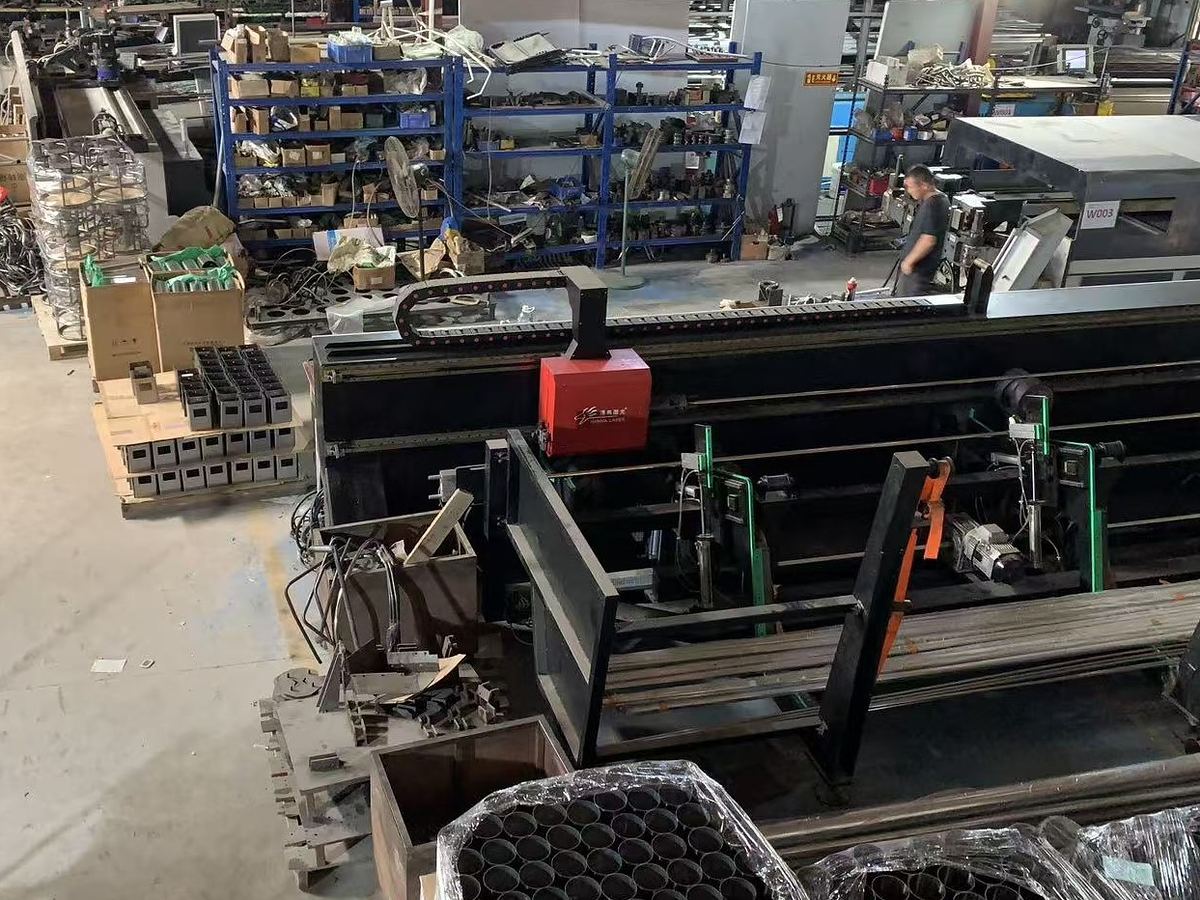
Laser tube cutting machine cutting a length of tube
The laser cuts the profile; it does not bend. Everything on this machine is about removing material to a shape, including the coped ends that let two tubes meet without a gap.

Which capability your drawing actually needsFour questions that settle it before you ask for a quote.

Most enquiries that mention laser cutting are really asking for one of four things. Working out which one you are asking for saves a round of emails, because a quote for cutting and a quote for bending are priced on entirely different things — cutting on metres and pierces, bending on tooling and set-up.

1. "I need it the right length"That is cutting. Send the cut length and the end condition — square cut, deburred, or with a profile.
2. "I need holes and slots in it"Cutting, and it is worth deciding whether the holes go in before or after the bend. Before is cheaper and more accurate; after sometimes cannot be reached once the part is bent.
3. "I need a radius and an angle"Bending, and the only two figures that matter are the centreline radius and the angle. The tolerance page explains what to put on the drawing.
4. "I need two tubes to meet cleanly"Both, in a fixed order: cut the saddle profile on the laser, bend, then weld. Doing it in the other order means cutting the cope against a shape that has already moved.

Question 4 is where a single supplier is worth more than the price difference. A cope cut by one company to fit a bend made by another has to be cut oversize and ground to fit, and grinding a cope is where a joint loses its closed root.

What the laser gives you that hand work cannotRepeatability on the joint, not just on the length.

The obvious benefit of laser cutting is a clean, square end at a length you asked for. The less obvious one is that the same digital model drives the cut and the bend, so a hole and a bend can be positioned relative to each other instead of to the end of the tube. On a batch, that is the difference between a fixture that closes every time and one that needs a rubber mallet.

Coped endsThe saddle where one tube lands on another, cut from the model rather than ground by eye. A closed fit-up means less weld metal and less pull from shrinkage.
Hole-to-bend positionSet from a datum on the model rather than from the cut end, so a hole does not drift when the cut length varies within tolerance.
No die, no toolingA cut profile needs no tooling. That is why one-offs and revisions are cheap on the cutting side and not on the bending side.
Edge qualityA laser-cut edge is a cut edge. It is not deburred, not chamfered and not a machined finish unless you ask for that as a separate operation.
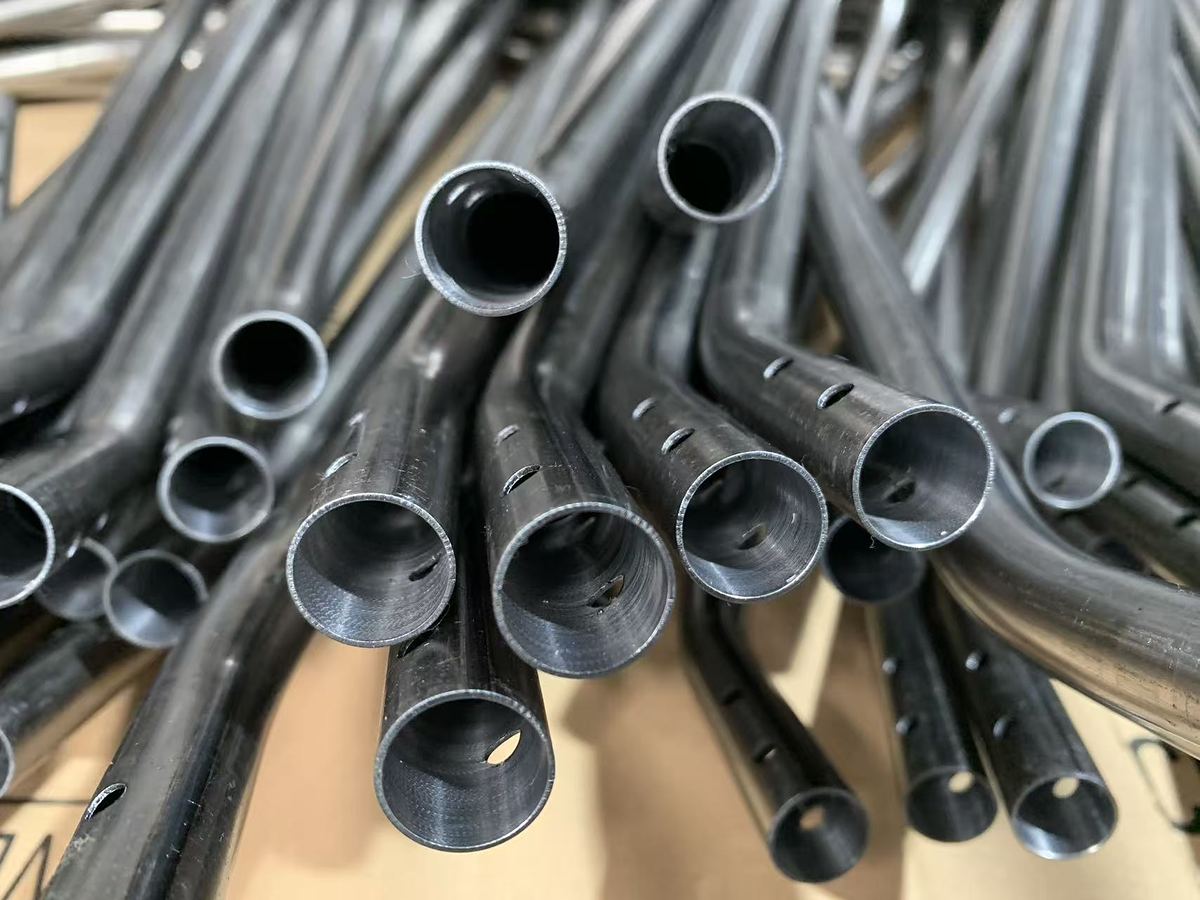
Bent tube ends with cut profiles and drilled holes
Cut ends and drilled holes on a bent part. The order these operations run in is decided by whether the tool can still reach the feature after the bend.

Where each capability stopsBoth limits are hard numbers, not scheduling preferences.

  1. No bending above Ø150 mm. The laser reaches Ø220 mm. Between those two figures a part can be cut and cannot be bent, and no amount of cutting capacity changes it.
  2. No bending of tube longer than the machine will take. A very long part with bends near both ends may need to be cut and joined instead, which is a drawing change, not a scheduling one.
  3. No machined finish straight off the laser. A laser-cut edge is a cut edge. If the drawing calls for a machined, chamfered or thread-milled end, that is a separate operation and is quoted separately.
  4. No EN 1090 structural certification. Cutting and bending are dimensional operations here. Structural steelwork certified to that standard is a different scope and is not offered.
  5. No safety-critical parts. Nothing that a rider's safety rests on — forks, brake components, steering parts — is produced at this workshop, at any size.
  6. No answer without the drawing. Whether a specific part can be cut and bent is decided by its radius, wall, material and the number of bends, not by the diameter alone. Send the drawing and the answer is specific.

General information only — not engineering advice. Suitability for a specific application, load case or service environment must be confirmed by the buyer's engineer.

Questions about cutting and bending

Can one supplier both laser cut and bend a tube?
Yes, and it is worth asking for both in one place, because a cut length and a bend angle are set by different machines and small differences between suppliers show up as parts that will not assemble. At our workshop the laser cuts and the eight bending machines run on the same floor, so a part is cut and bent without being shipped between two companies. The one thing to check before you rely on it is the bending diameter limit, which is 150 mm and is lower than the cutting limit.
What is the largest tube you can laser cut and then bend?
150 mm outside diameter is the ceiling for bending, so that is the answer for a part that has to be both cut and bent. Laser cutting itself reaches 220 mm outside diameter on stock up to 6 m long, on two machines. A tube between those two sizes can be cut here but not bent here, and that gap is the single most common misunderstanding in enquiries that mention laser cutting.
Why do tube ends need a coped cut before welding?
When one round tube meets another at an angle, the end has to be cut to a saddle shape or the joint closes on a point instead of a full contact line. A laser can cut that profile from the same model that produced the bend, so the fit-up is closed before anyone picks up a torch. Hand grinding to a scribed line leaves a gap that has to be filled with weld metal, and that gap is where distortion starts.
Do you also laser cut sheet, or only tube?
Both. Sheet laser cutting and press-brake bending for flat parts run alongside the tube work, which matters when a tube assembly includes a mounting plate or a bracket. A flat part and a bent tube are quoted together rather than being two separate purchases, and the hole positions in the plate can be related to the bend datums on the tube.

Send the drawing and say which operations you need.

The reply states what can be cut, what can be bent, and whether any feature in the part sits outside both machines.

WhatsApp